Some collections are curated deliberately. Mine started in my basement.
For months, three pieces of pottery sat downstairs — a textured vessel and a unique vase I'd found at Find Furnish while shopping with my dad, originally with a client in mind who ultimately passed on them, and a larger vase I'd spotted at Retro Wanderlust the following week, snagged on sale with a future client in mind. They were good pieces. Great pieces, actually. They just didn't have a home yet.
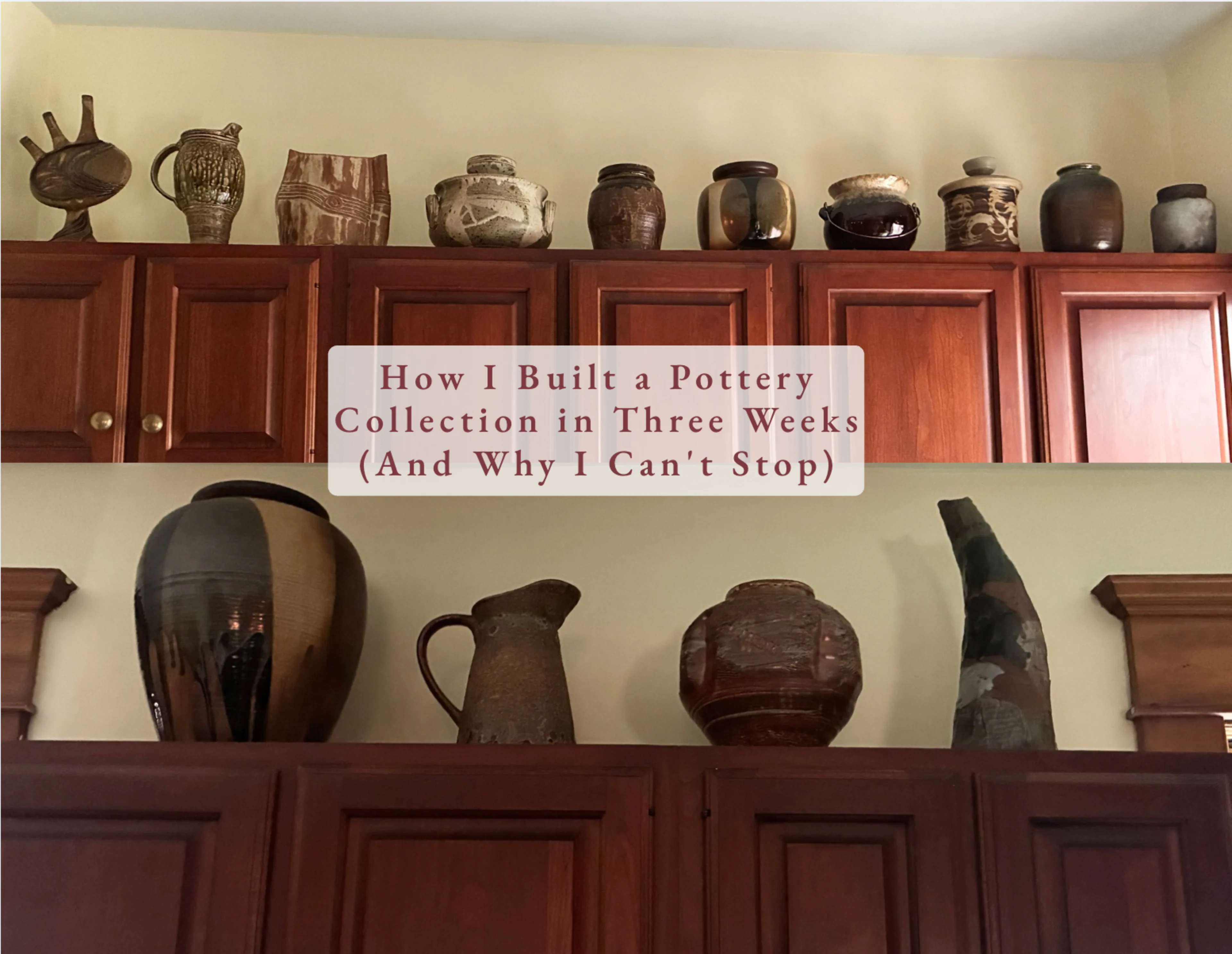
Then one afternoon while organizing the basement, I carried them upstairs and started walking through the house. I have a lot of decor — this is not a secret — so finding real estate for new objects requires a certain creative problem solving. And then I looked up. The kitchen cabinets. There was space up there, and the proportions were perfect. Up they went, and just like that something clicked.
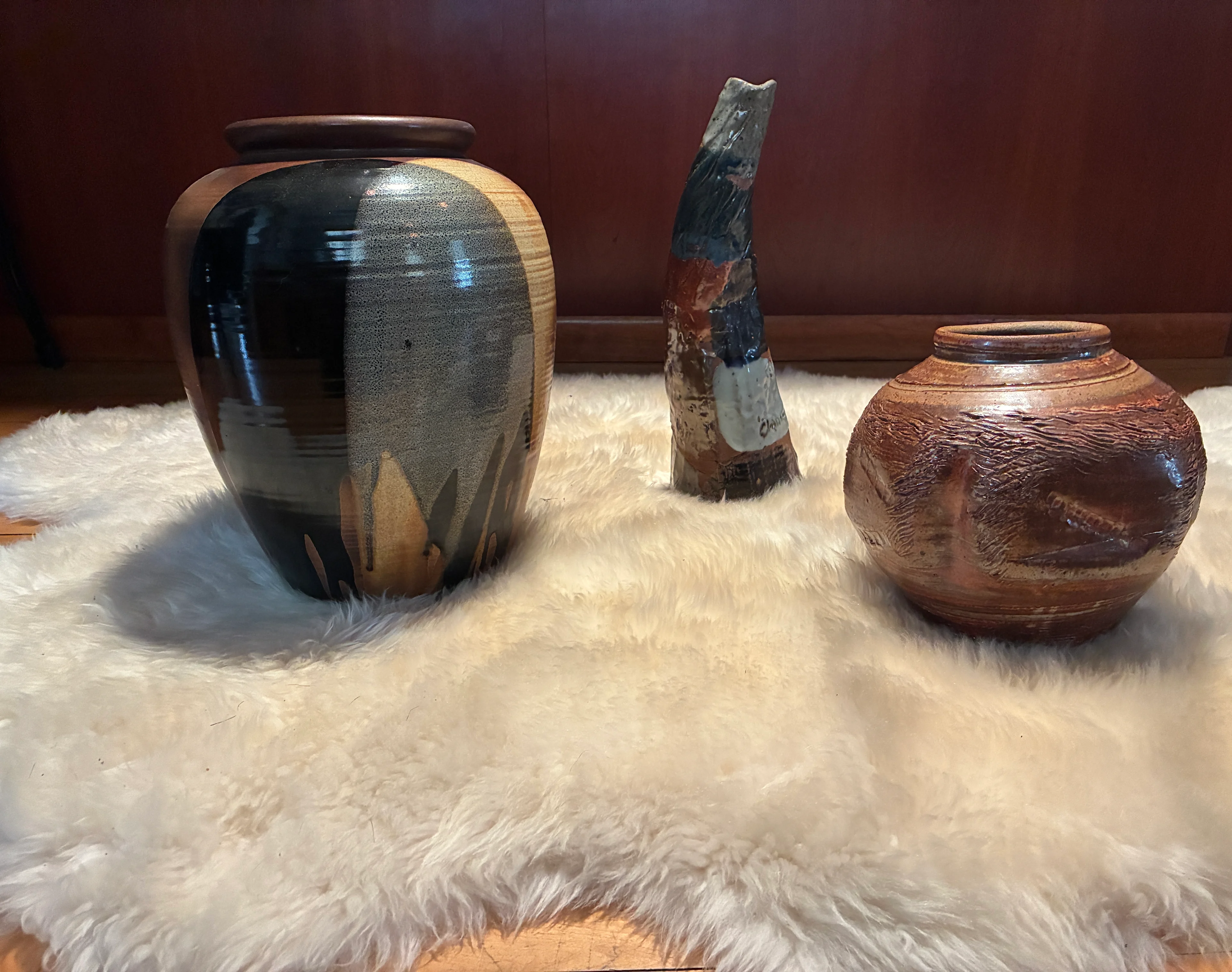
The Piece That Started Everything
A few weeks later I was at an estate sale and came across a lidded taupe vessel that stopped me cold. The lid was unusual, the handles were everything — that kind of tactile detail that makes you pick something up and not put it back down. I brought it home, set it on top of the larger bank of cabinets, and said to myself: I'm going to fill this entire run with pottery.
And that was that.

The Rabbit Hole Deepens
The following week I was at Missouri Mouse — a Saint Paul antique shop I frequent probably more than I should — and found a brown glazed cauldron that felt fated. It matched a McCoy nesting bowl set and teapot I'd previously picked up at Missouri Mouse and another estate sale, pieces I'd loved individually but that now suddenly felt like they belonged together.

A Very Good Week at Find Furnish
Next stop: Find Furnish, where I found three pieces in one visit. A pitcher with the most beautiful glaze — I love the irregularities and those pinched corners, so good. A brown and white textured piece that drew me in for its color, texture and truly unique shape. And a textured jug in the perfect shade of warm brown with just enough surface interest to hold its own in a lineup.

The Retro Wanderlust Haul
Two days later — yes, two days — I was at Retro Wanderlust and walked out with four pieces. The first one I was drawn to was the lidded vessel, and honestly it's become one of my favorites in the entire collection. Turns out it's a piece by Designs West, a California stoneware company founded in the 1960s by former employees of renowned potter Robert Maxwell. Their work is considered California art pottery — the kind of thing that shows up on 1stDibs and collector sites. Legit collectible vintage, not just a thrift store find. The glaze, the lid, the quiet confidence of it — I knew the moment I picked it up.
I also found a brown jug, a gray jug, and a brown and black geometric vase. Four pieces, one visit, zero regrets.

The Final Two
Last week I made a deliberate trip to Mid Mod Men with one goal — find the pieces to finish the collection. And I did. A triple bud vase by Harriet Herrick that is so weird and so lovely it stopped me in my tracks the moment I saw it. And a textured pitcher from West Germany with that beautiful, unmistakable mid century quality.
The collection is complete. And I love it. Oh — and the most expensive piece in this entire collection? The Harriet Herrick bud vase at $80. The rest? Even less. Proof that a great collection doesn't require a great budget, just a great eye.

The Full Collection
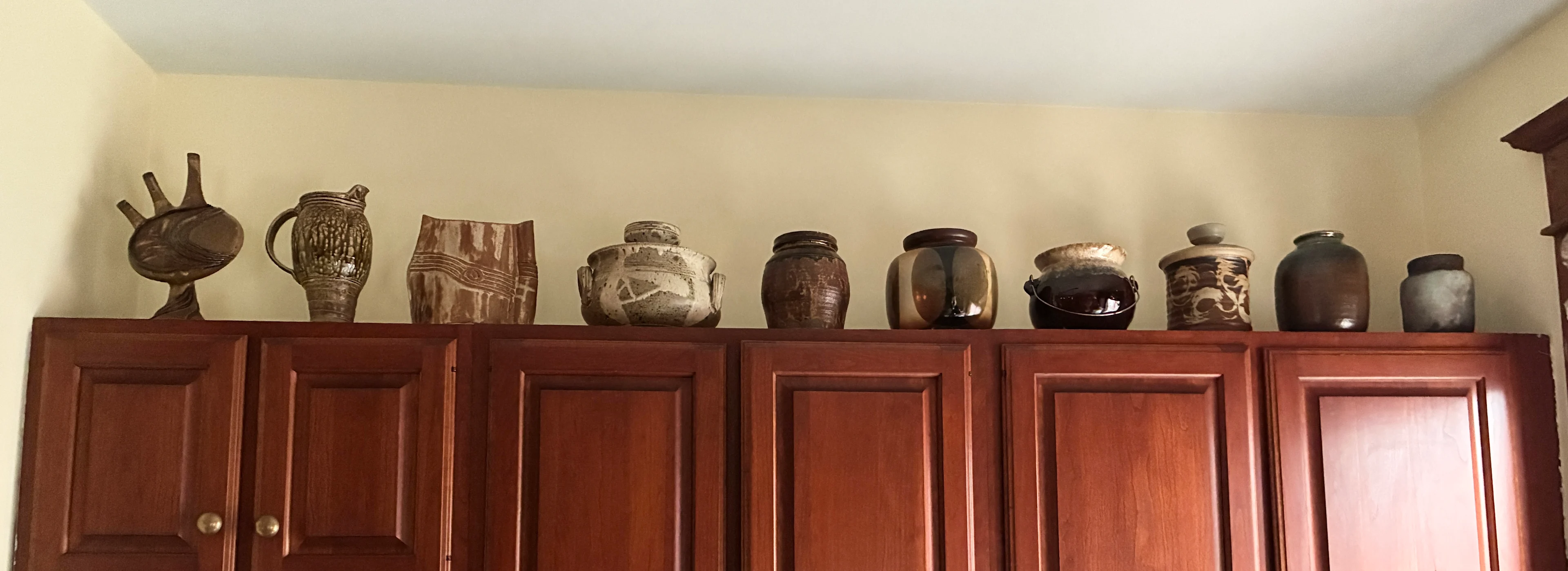
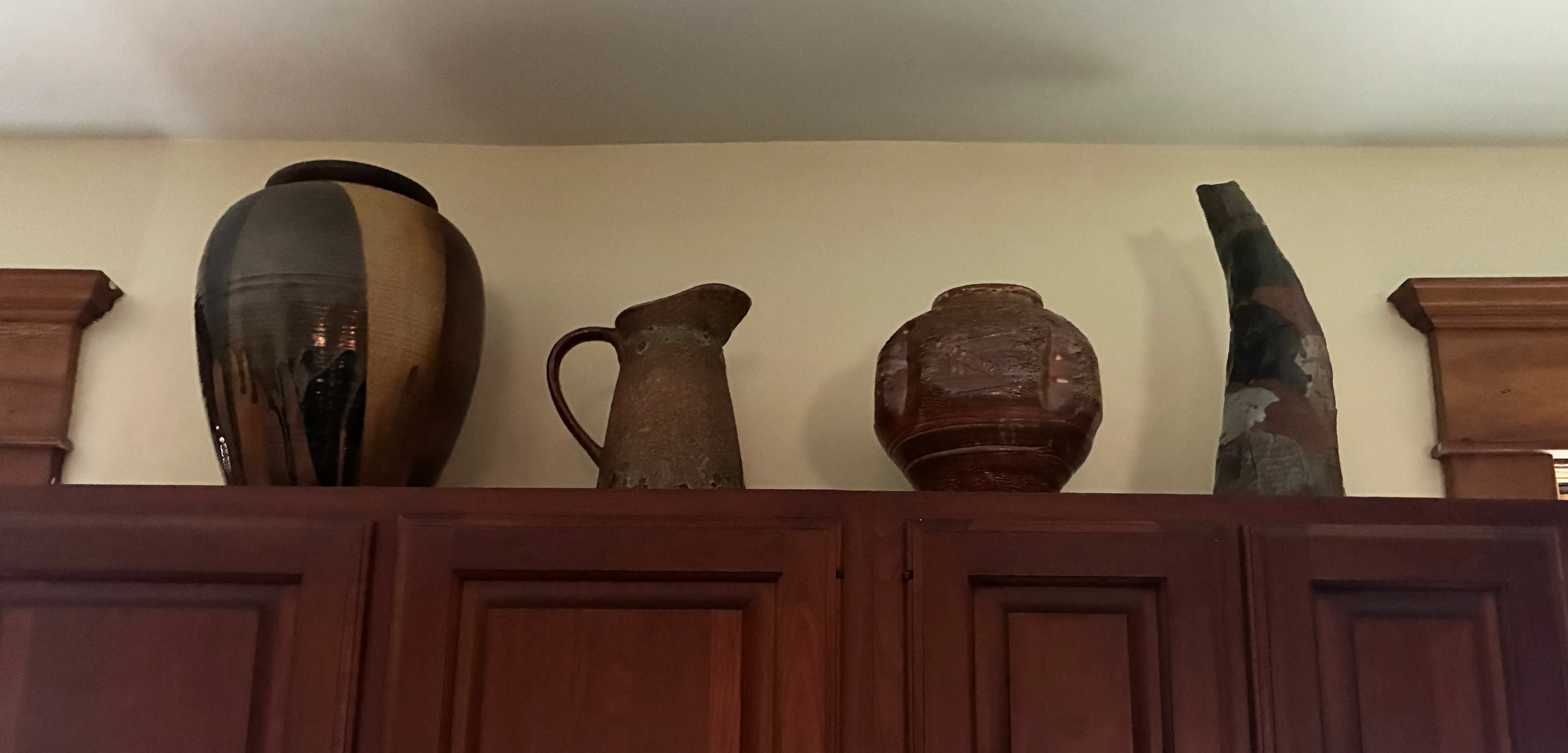
What I Learned: Design Tips for Building a Cohesive Vintage Collection Fast
1. Walk the space twice. Always. My single biggest piece of advice for vintage shopping — do a full lap, then do it again. You always find things the second time around that you missed on the first pass. If time permits, go for a third. The store looks completely different once your eye has warmed up.
2. Start with what you already have. Three pieces sat in my basement for months before I realized they were the foundation of something. Don't overlook what you already own — sometimes the collection is waiting for you to notice it.
3. Let one great piece set the direction. The lidded gray vessel with the handles was the piece that made me commit. Find your anchor piece first and let everything else respond to it.
4. Shop with a loose brief, not a strict one. I wasn't looking for pottery specifically. I was just looking. The best collections come from staying open and letting objects find you.
5. Cohesion comes from restraint, not matching. Every piece in this collection is different — different glazes, different forms, different origins. What holds it together is a shared palette (warm browns, grays, earthy tones) and a commitment to pieces with texture and character. You don't need matchy. You need a point of view.
6. Display as you go. Don't wait until the collection is "complete" to put things out. Seeing pieces in context helps you understand what's missing and what belongs. The cabinet told me what it needed next.