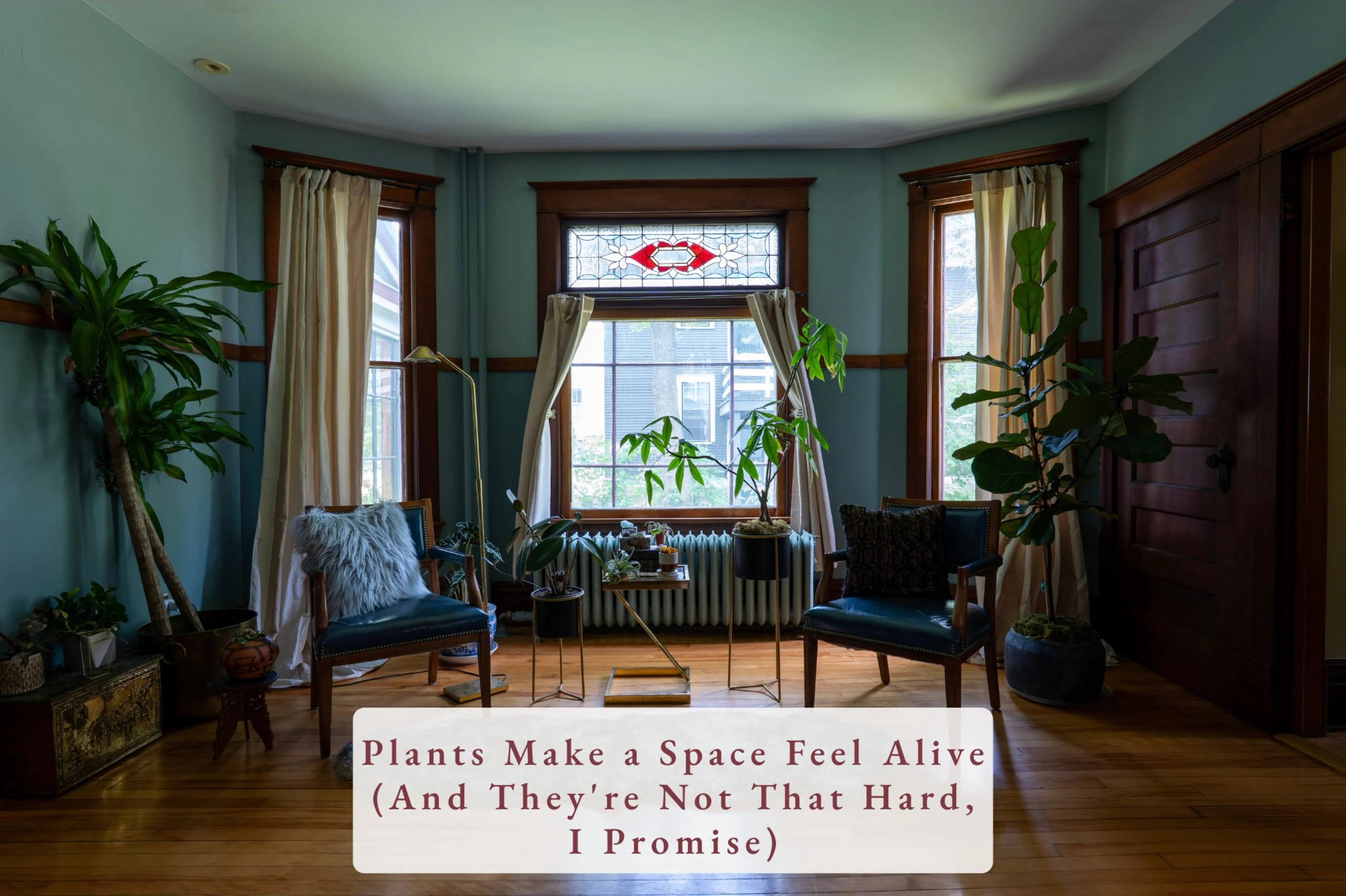
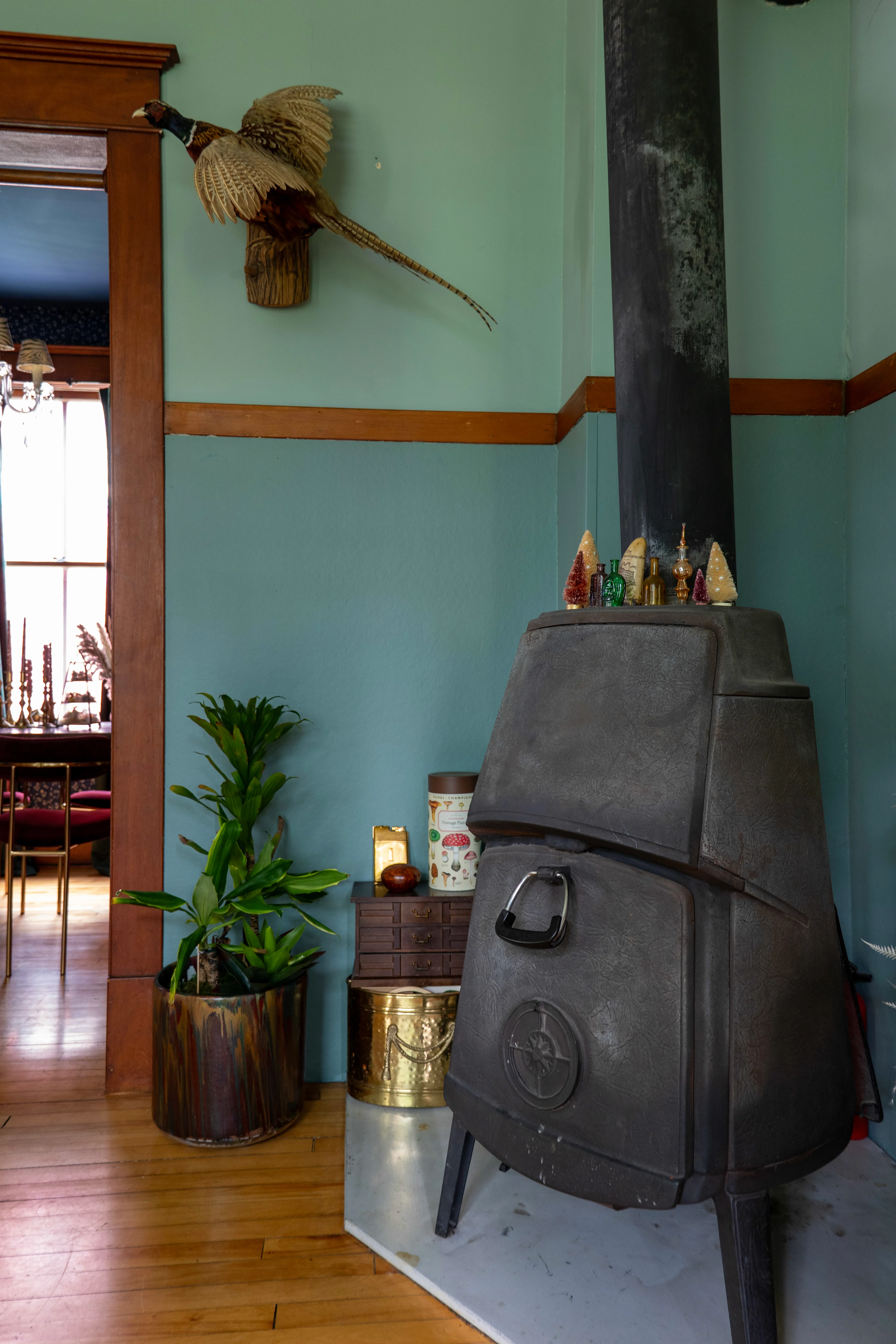
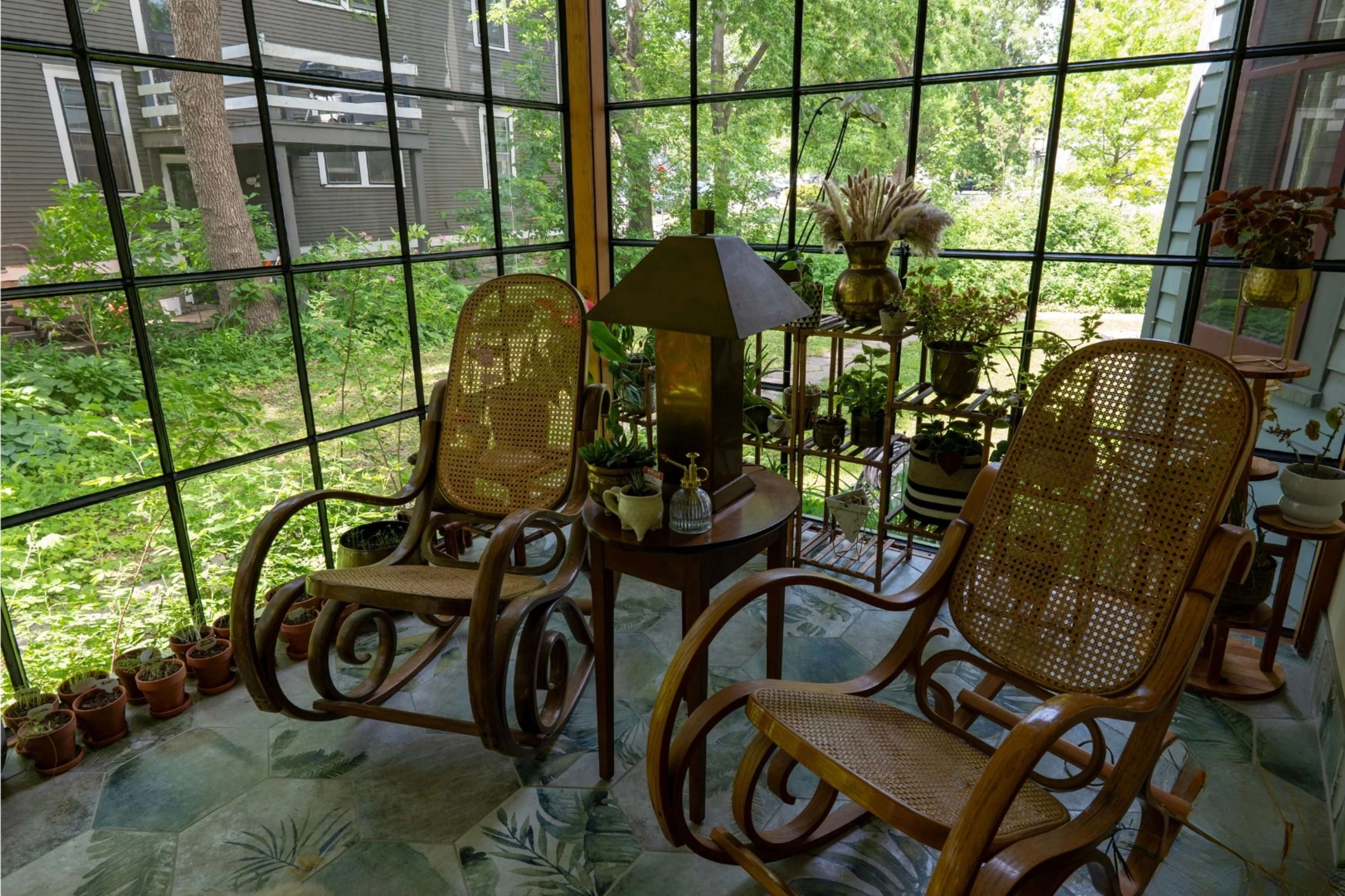
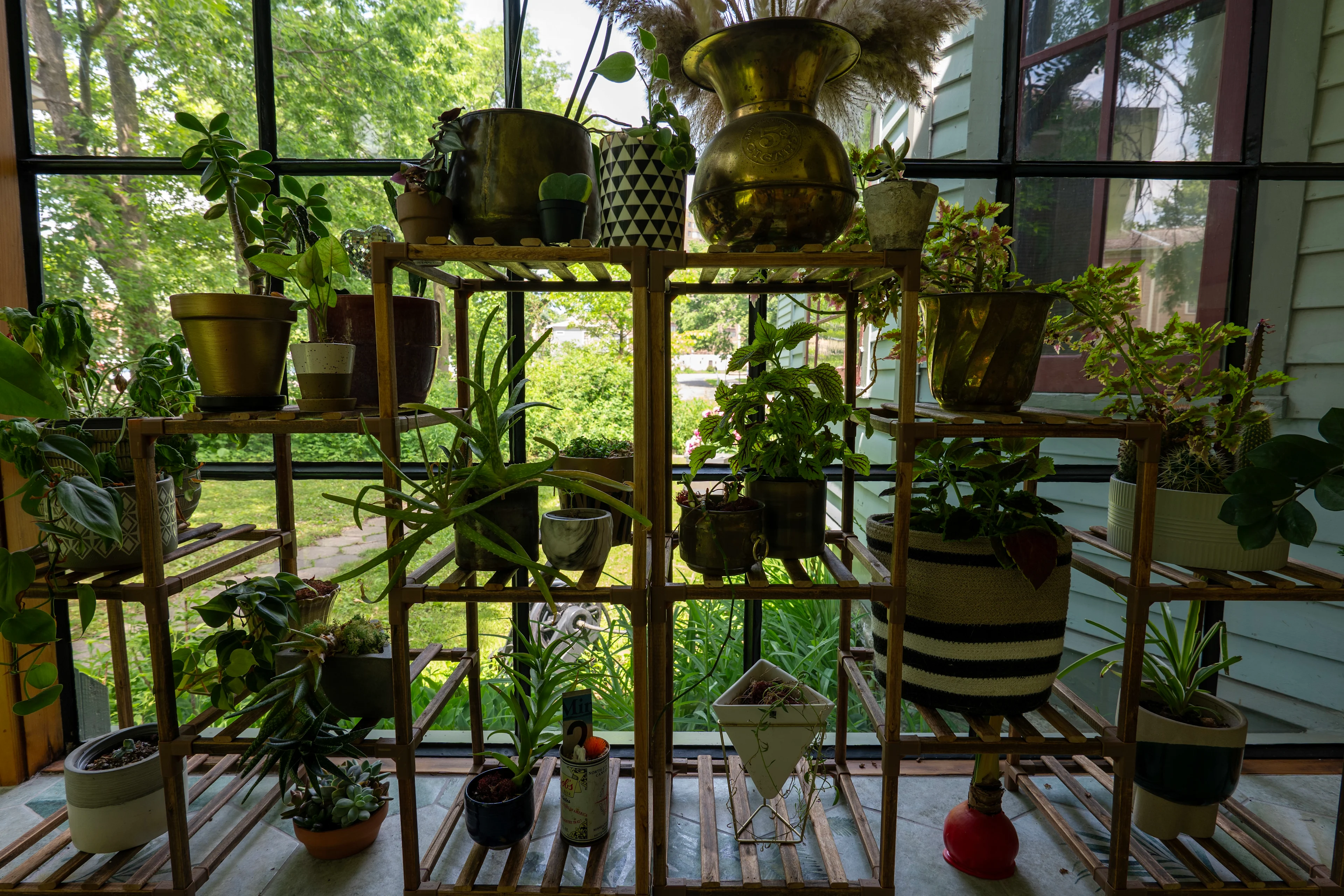
I have a house full of plants. My sunroom is basically a jungle. My sitting room has a fiddle leaf fig, a rubber plant, a tropical beauty I can't name but absolutely love, succulents, and an assortment of other varieties arranged on a carved gold chest that deserve their own moment. There are plants on the kitchen counter, in the dining room, tucked into corners, trailing off shelves. I have an aloe that has lived on radiators in two different houses and is thriving.
And air plants? I've accepted that I simply cannot keep them alive. I buy the artificial ones on Etsy now — and honestly? It's freed up my energy to focus on the plants that actually thrive here. Zero regrets.
Here's the thing about plants and design: they do something no piece of furniture can fully replicate. They bring life into a space — literally. Movement, oxygen, color, organic texture. A room with a great plant feels different than the same room without it. Not better decorated necessarily. Just more alive.
That said — you do not need a plant in every room. I don't have any in my bedroom beyond dried florals, which are beautiful and require exactly zero watering. Plants are not a rule. They're a tool. Use them where they make you happy, where the light cooperates, and where they make the room feel like something.
Why Plants Work as a Design Element
Plants do specific things in a space that are genuinely hard to replicate otherwise.
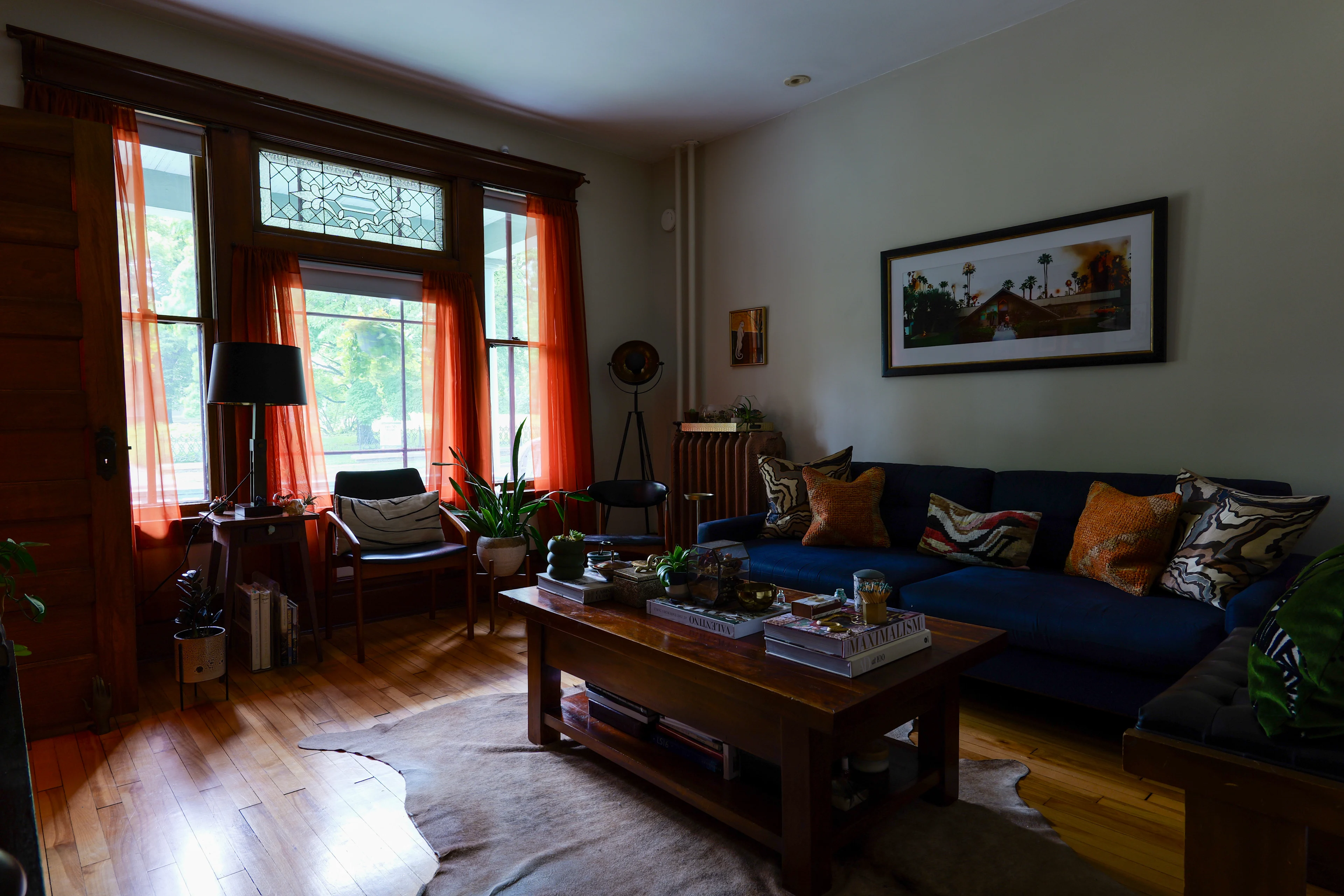
They add organic texture. In a room full of hard surfaces — wood, metal, stone — a plant brings something soft, irregular, and alive. That contrast is what makes a space feel layered rather than staged.
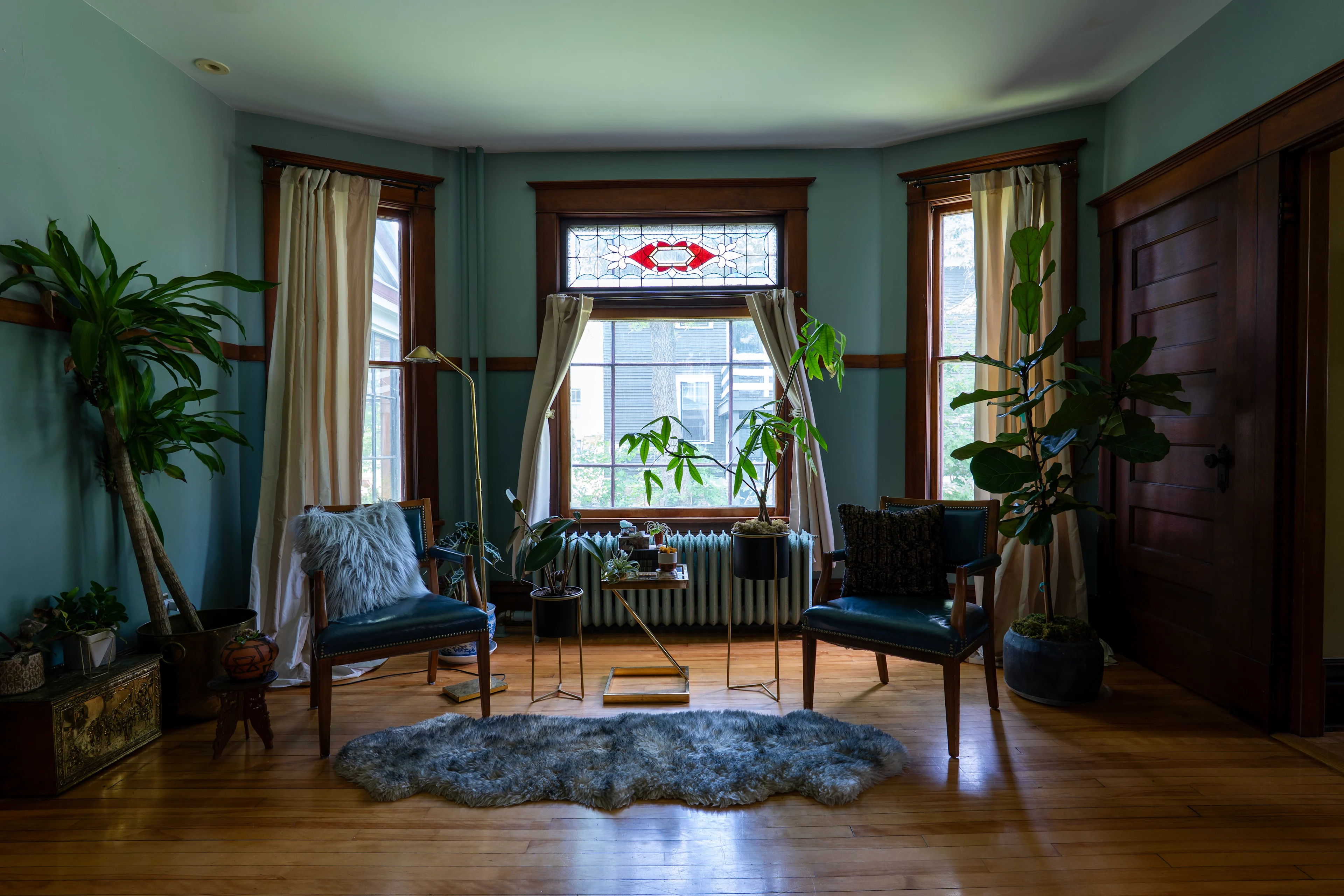
They fill vertical space. A tall fiddle leaf fig or a snake plant in a beautiful pot can anchor a corner the way sculpture does. It draws the eye up and gives the room scale. My sitting room has plants flanking the bay windows and a tall tropical in the corner and it completely changes how that room reads.
They introduce color that feels natural. Not paint-color, not pillow-color — green, in all its variations, reads as calm and grounding. It works with almost everything.
In a cold climate, they keep you sane. I'm in Minnesota. We have winters. When it is -10 outside and everything is gray and frozen, walking into a room full of living, growing things does something real for your nervous system. I run a humidifier for my plants all winter — the kind you can control from your phone, because yes, we are at that level of commitment — and I clean it every single week because it runs 24 hours a day. Is that a lot? Maybe. But my plants are thriving and so is my skin, so I'm counting it as a win.
Where I Actually Shop for Plants
This is the part nobody talks about enough. You do not need to spend a lot.
Trader Joe's is my most-used resource and I will die on this hill. Cheap, rotating seasonal stock, always something interesting. Go often because it changes constantly.
Costco — and I cannot stress this enough. I got a Japanese maple for $52 that would have been at least $150 anywhere else. I also got my new fiddle leaf fig there after a heartbreaking loss (more on that in a moment). The value is genuinely unreal and the plants are healthy. No regrets, ever.
Leitner's Garden Center and Highland Nursery for when I want to browse and find something specific. Both are wonderful local resources.
Mother in the North Loop is beautiful — curated selection, great for when you want something special. (The Saint Paul location closed a few years ago and I am still not over it. I used to pop in at least once a month.)
Style Society carries some great smalls alongside all the furniture and vintage finds.
The farmers market is also always worth a visit — I'll go and pick out every single plant individually when I'm feeling it. Sometimes that's the right answer. Sometimes Costco is the right answer. Both approaches get you there.
Where I Shop for Pots (Because the Pot Matters)
The pot is part of the design. A beautiful plant in a bad pot is a missed opportunity. A beautiful plant in a great pot, in the right corner, with good light — that's a design moment.
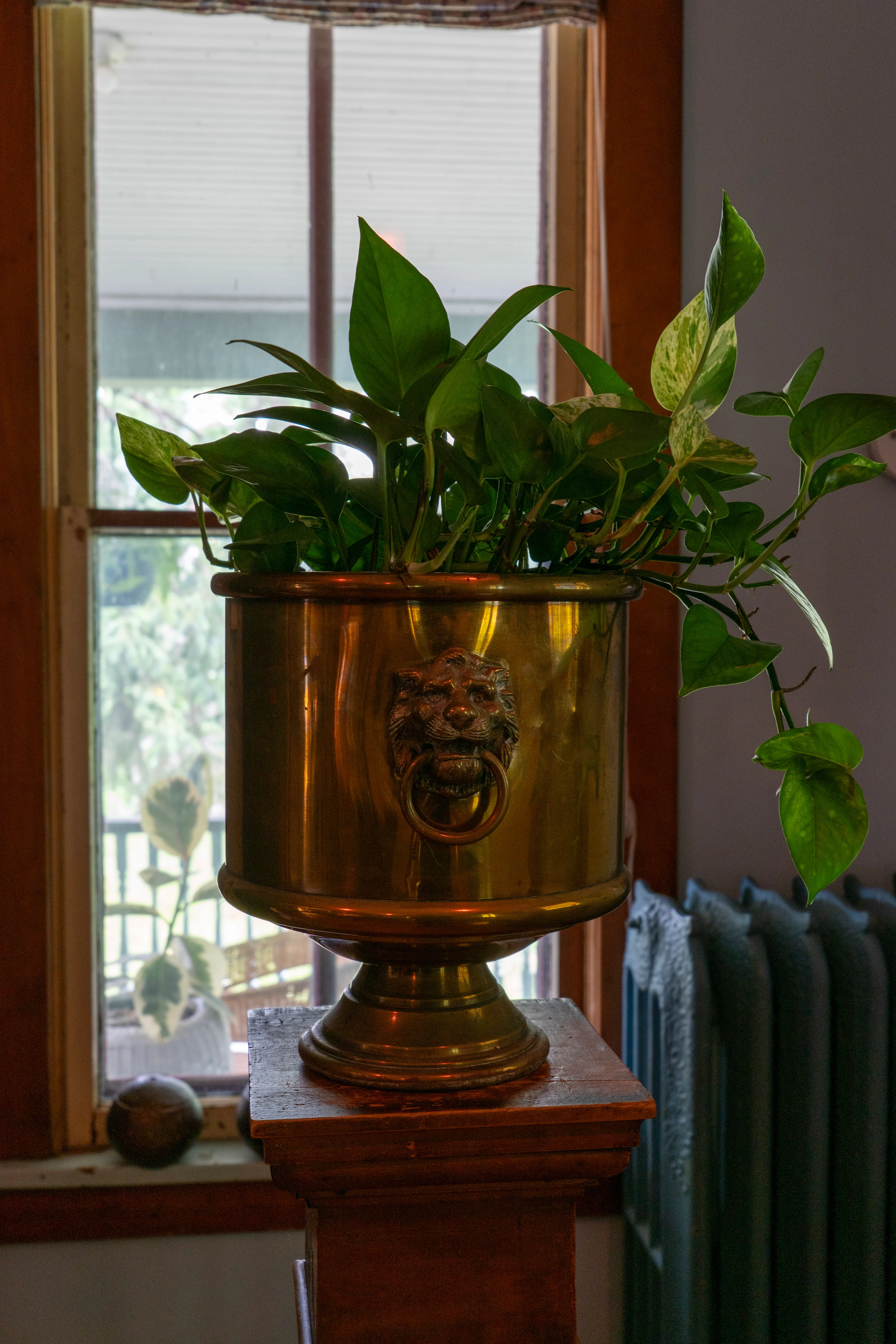
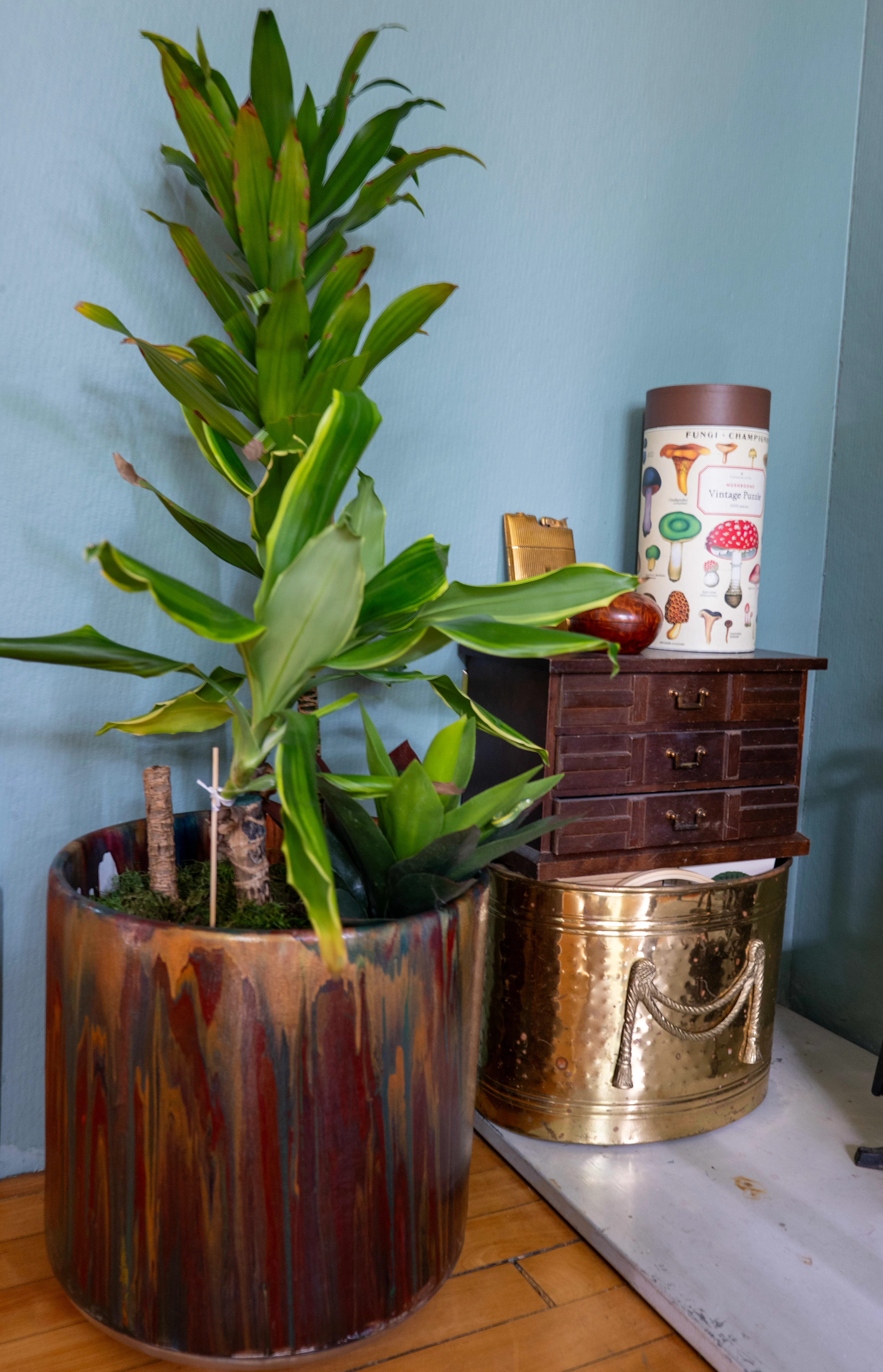
My best pots have come from estate sales and vintage stores. Hands down. You find things with real character — brass cachepots, ceramic pieces, interesting vessels that were never meant to be planters but absolutely should be. Loft Antiques, Style Society, and Missouri Mouse are all great hunting grounds.
Etsy is wonderful for pots — and yes, also for high quality artificial plants when you need them. This is a judgment-free zone.
Here's something I love to do: use a beautiful object as a planter. A vintage urn, a brass cachepot, a ceramic piece you fell in love with at an estate sale. If it doesn't have a drainage hole, you can drill one — and it's not as scary as it sounds.
How to drill a drainage hole without cracking your pot: Use a diamond-tipped drill bit, not a regular one. Create a small puddle of water right on the spot you're drilling — it acts as a coolant and is what prevents cracking. Go slow, use light pressure, and let the bit do the work. Ceramic and terracotta are fairly forgiving. Glazed pottery needs more patience. If it's something precious, practice on something cheap first. You can also simply use a beautiful vessel as a cover pot with a nursery pot inside — equally valid, zero drilling required.
The Plants I Actually Recommend
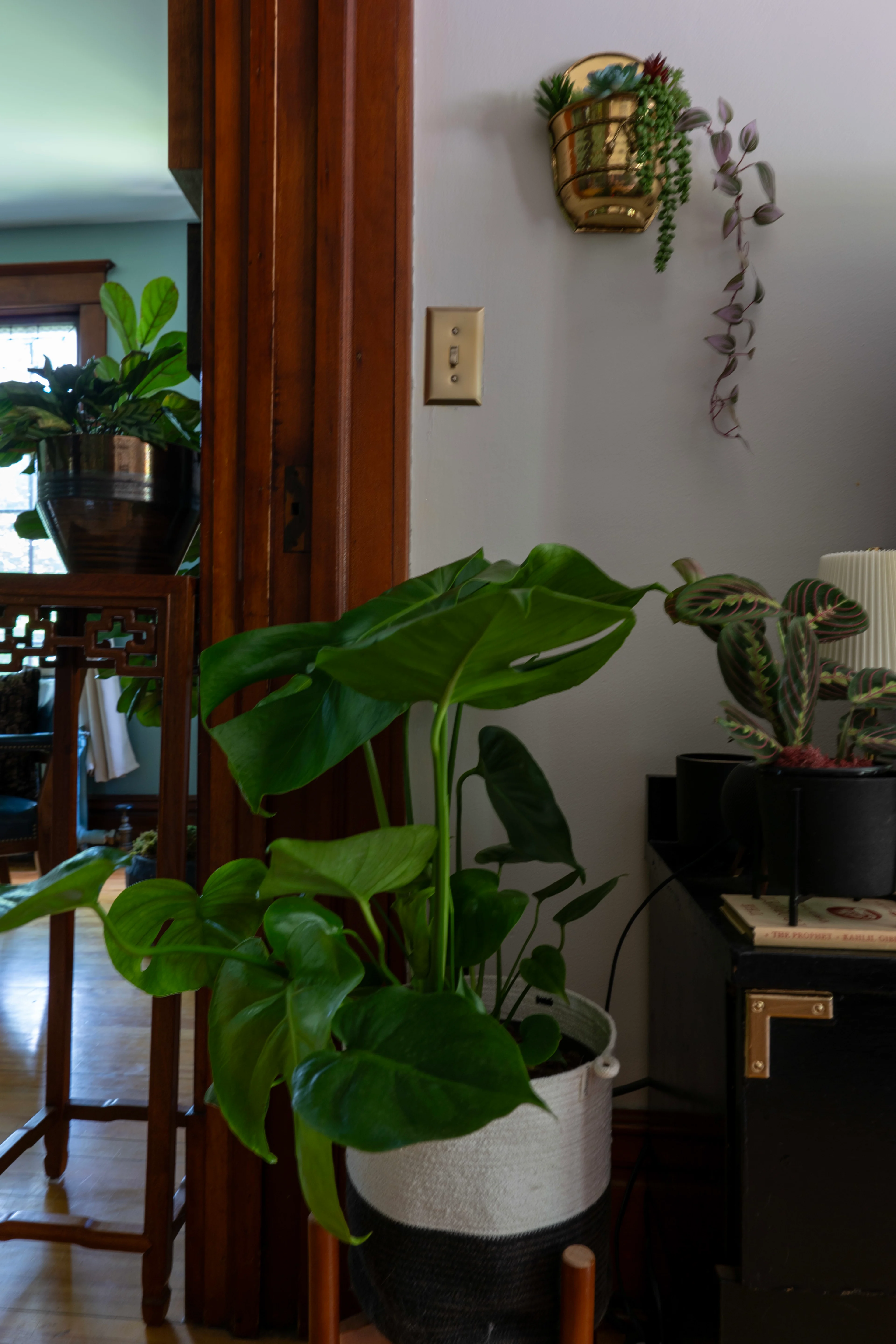
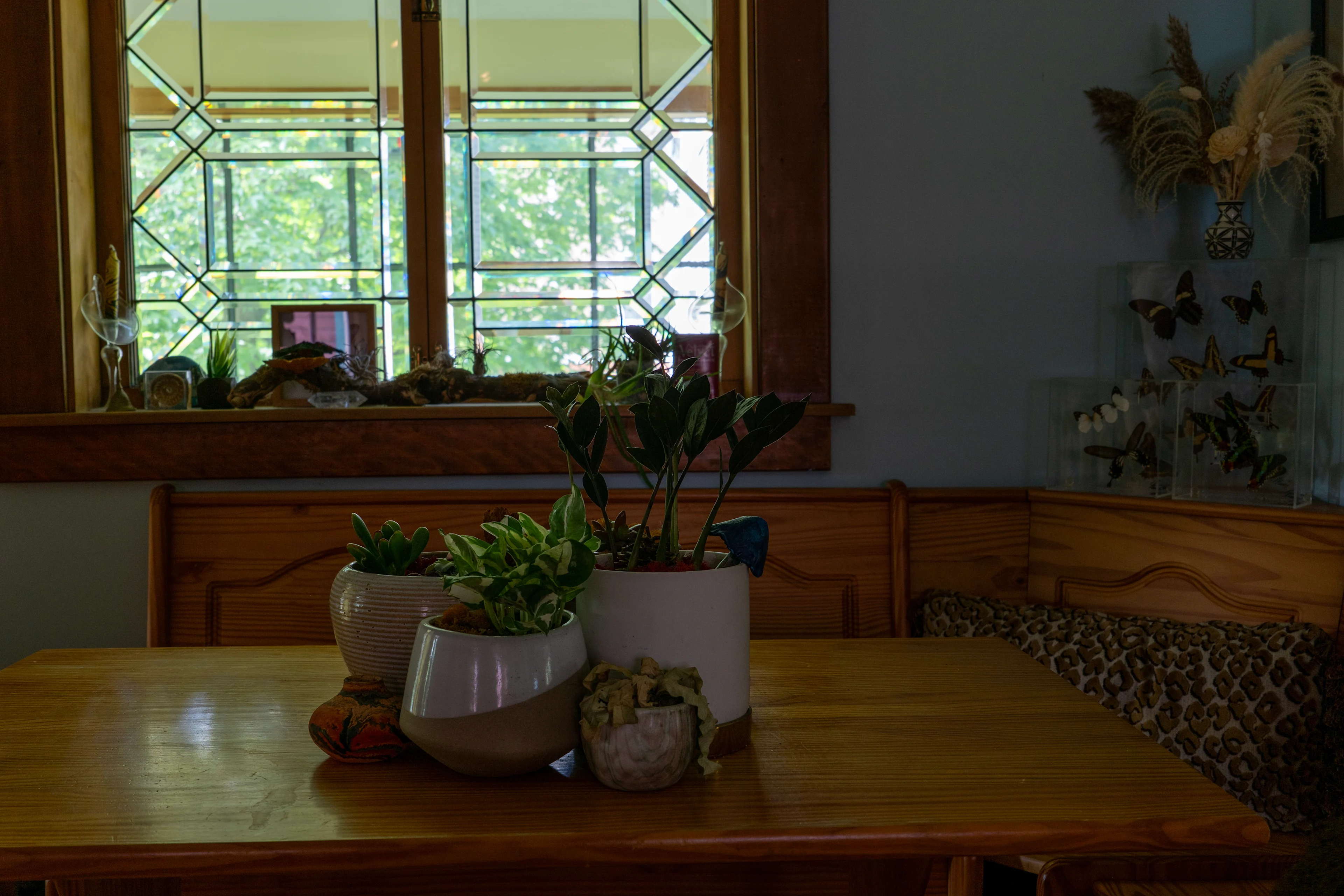
Pothos — my most-used plant. Trails beautifully, tolerates a lot, tells you when it needs water by drooping dramatically and then bouncing back like nothing happened. Radiator-approved in my house.
Fiddle leaf fig — yes, they have a reputation. Bright indirect light, water when the top inch of soil is dry, and — this is important — once you find its spot, do not move it. I had one for seven years. Seven years. I moved it to the other side of the room and it died. Just gave up entirely. I tried to cut it back and revive it. No luck. Sometimes you have to say goodbye to the things you love. I got a new one at Costco and we're starting fresh.
Rubber plant — gorgeous, architectural, deep burgundy-green leaves, much more forgiving than a fiddle leaf. Highly recommend.
Aloe — mine has lived on cast iron radiators in two different houses. My terrarium guy in San Francisco told me it would be fine there, and he was right. (Yes, I had a terrarium guy, and I loved him. He did the florals for my wedding and flew in black hydrangeas from Japan. I miss that man.) Aloe loves heat and dry air. Also useful if you burn yourself cooking.
Calathea — stunning patterned leaves, beautiful in a sitting room with good indirect light. A little more particular about humidity but worth it.
ZZ plant — nearly indestructible, dark glossy leaves, handles low light beautifully. Very architectural.
Peace lily — one of the few flowering plants that actually does well indoors. Also a dramatic drooper when thirsty, which is honestly helpful feedback.
Snake plant (Sansevieria) — striking upright form, thrives on neglect, handles lower light. Great for corners.
Japanese maple — if you want a statement plant and you see one at Costco for $52, you buy it immediately and you do not ask questions.
The Radiator Question
You will read everywhere that you should keep plants away from radiators. Here is my more nuanced take: know your plant.
Tender tropicals, ferns, anything that loves humidity — yes, give those some distance. But tough, drought-tolerant plants? My pothos sits right on a radiator. My aloe has lived on radiators for years. The heat doesn't bother them; if anything they seem to thrive on it.
Old Saint Paul Victorians have cast iron radiators and they are wonderful and also intense. Pay attention to what's struggling versus what's thriving and adjust. Your plants will tell you. Mine told me very clearly about the fiddle leaf situation and I didn't listen in time. Lesson learned.
The Humidifier Situation
If you have plants AND you live somewhere with brutal winters AND you have radiant heat, get a humidifier. I have the kind you can control with your phone because when it's January and you're lying in bed and you realize you forgot to turn it on, you will want that feature. I clean it every single week — it runs 24 hours a day so this is non-negotiable unless you want a petri dish situation. It is good for your plants, good for your skin, and good for your general winter sanity. Worth every bit of the effort.
What About Artificial Plants?
There are absolutely situations where they make sense.
Dark rooms with no natural light. Spaces where nothing seems to survive. Plants you love the look of but simply cannot keep alive no matter what you try. I have a beautiful trailing plant in a wall basket that is completely artificial and looks wonderful. I have dried florals in my bedroom that I genuinely love.
The key is quality. Bad faux looks bad. Good faux — high quality dried botanicals, well-made silk, a convincing find from Etsy — can be genuinely beautiful.
Air plants specifically: I have tried, repeatedly, and every single one has died on me. I now buy artificial ones on Etsy. They live in my terrariums alongside the moss and the mushrooms and the starfish and the whole thing looks incredible. It also means I have more time and energy for the plants that actually thrive here, which are many. That feels like the right trade.
The Simple Version
One good plant. One good pot. One spot with natural light. Water when the soil is dry an inch down. Pay attention to what's thriving and what isn't and adjust accordingly.
Plants make a space feel alive. And when you're in Minnesota staring down another gray February, that matters more than almost anything else I can put in a room.
Ready to think about your space differently? A complimentary discovery call is a great place to start — book yours here.