When a room feels “off,” most people assume it’s the color.
They repaint. They change pillows. They start over.
But in my experience, flat rooms usually aren’t a color problem — they’re a texture problem.
Texture is what gives a space depth, warmth, and quiet richness. It’s what makes a room feel layered instead of staged, personal instead of predictable. When materials vary — when something soft meets something structured, when organic elements balance refined finishes — a space starts to feel considered.
This is the simple rule I return to in nearly every project.
It’s the difference between a room that looks finished and one that feels finished.
The 3-Texture Rule
Every room needs:
• Something soft
• Something structured
• Something organic
Soft might be velvet, mohair, wool, linen, or silk. Structured could be wood, brass, iron, marble, or sculptural lighting. Organic often shows up in woven rugs, ceramics, vintage pieces, or natural fibers.
When these three coexist, even a neutral palette gains depth. A room doesn’t just look finished — it feels dimensional.
Layering Texture in Real Projects
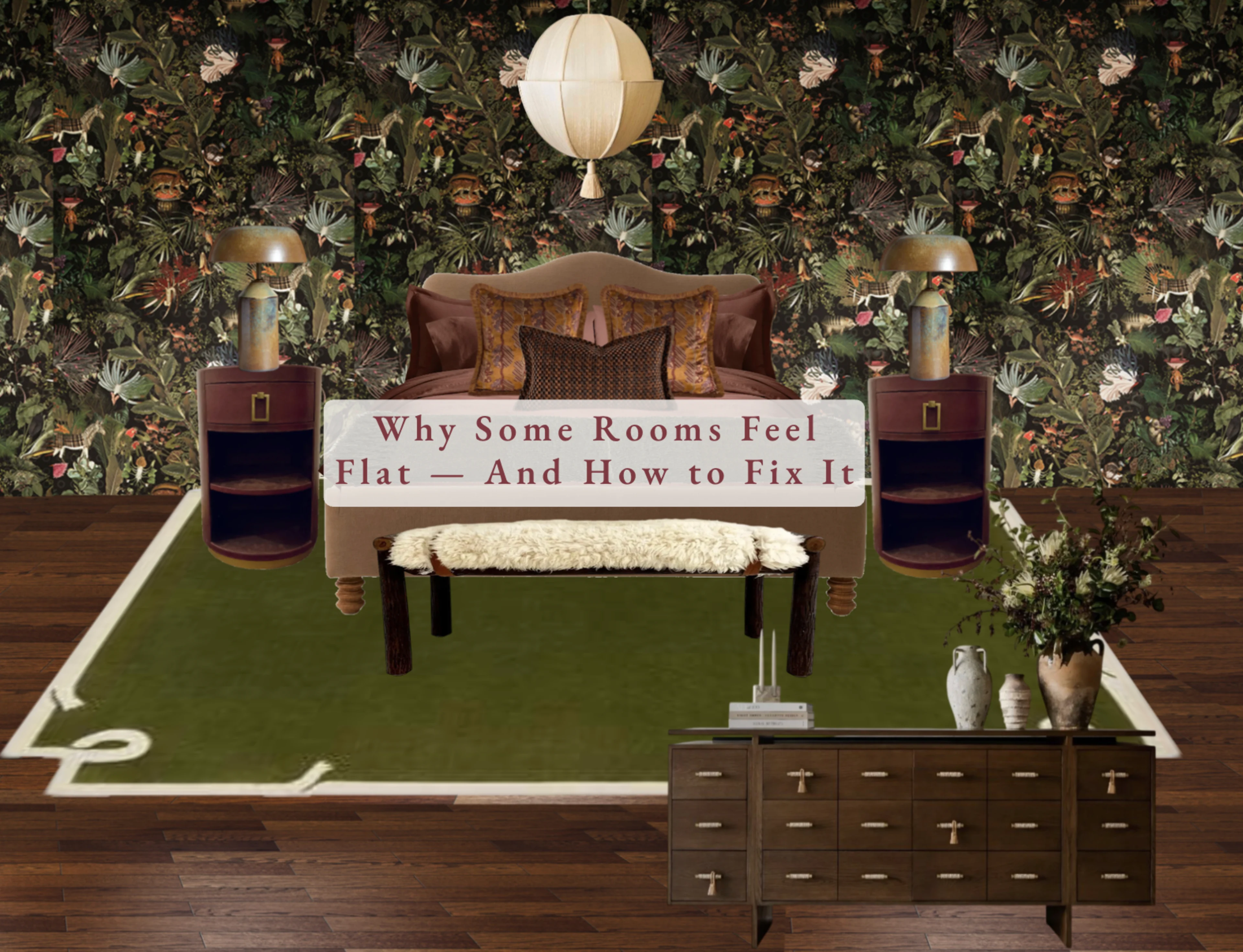
Nocturne Menagerie

This bedroom is a study in layered materials. A fabric wallpaper sets the stage, wrapping the room in tactile richness. The mohair bed introduces softness, while leather nightstands and a deep wool rug ground the space. A sheepskin-wrapped bench adds contrast at the foot of the bed, and handmade ceramic lamps bring subtle irregularity and warmth.
Overhead, a dupioni silk lantern softens the glow, creating another layer of material depth.
Nothing here is accidental. It’s texture on texture — mohair, leather, wool, silk, ceramic — working together to create mood without chaos.
Verdant Provenance

This dining room shows how texture can feel restrained and elegant.
The walls are wrapped in silk wallpaper, subtle but luminous. Vintage oak-and-velvet dining chairs add softness against the sculptural wood table. An all-wool rug grounds the room, while a brass chandelier with pleated silk shades introduces structure and tailored refinement overhead.
A pleated ceramic table lamp adds another tactile layer — softly sculptural and quietly dimensional — while the sideboard blends linen velvet and oak, reinforcing the interplay between soft and solid. Finished with soft wool drapery, the room comes together through material contrast — not bold color.
Here, texture doesn’t shout. It layers gently — silk, velvet, wool, oak, brass, and ceramic — creating depth through thoughtful restraint.
Tailored Warmth

In this entry vignette, velvet, leather, brass, marble, and a vintage kilim repeat in thoughtful rhythm. The leather-front console sits beneath a scalloped brass mirror, while a rust velvet bench stretches the composition. Underfoot, the vintage kilim introduces woven softness and subtle variation.
And then there’s the feather artwork — soft, organic, and dimensional — adding yet another tactile layer to the story.
This is texture on texture on texture, but with restraint. When materials echo one another across surfaces, the result feels curated rather than crowded.
Texture in Real Life: A Downtown Penthouse
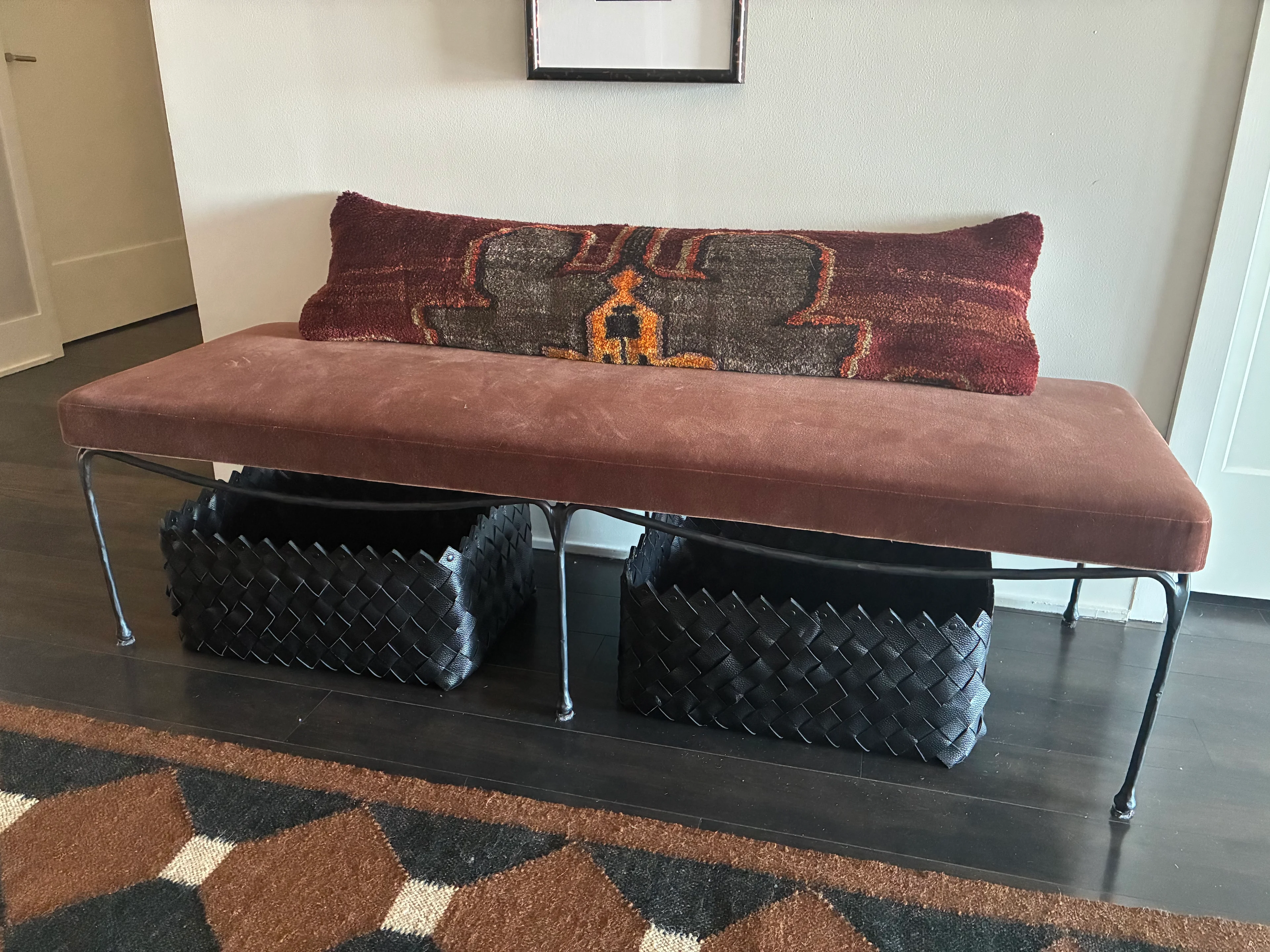
In a recent downtown penthouse project, texture did the heavy lifting.
A velvet bench with iron legs rests atop a custom jute-and-wool runner. Woven leather baskets add structure below, while a vintage Turkish rug pillow introduces history and pattern. Even the tortoiseshell frames in the gallery wall bring subtle sheen and variation.
Soft meets structured. Organic meets refined. The result feels rich without being busy.
Bringing It Home

I approach my own home the same way I approach client spaces — letting materials lead.
A velvet fringe pouf layered with a brass tray, pottery, glass, and candlelight. A woven sofa softened with chenille, silk tassels, and velvet pillows. Sheer drapery filtering light against warm wood trim and leather seating. Linen, brass, aged finishes, natural fibers — each adding something slightly different to the conversation.
None of these pieces are dramatic on their own. Together, they create warmth, depth, and subtle richness.
Texture doesn’t need to be loud. It builds quietly.
A Real-Life Example

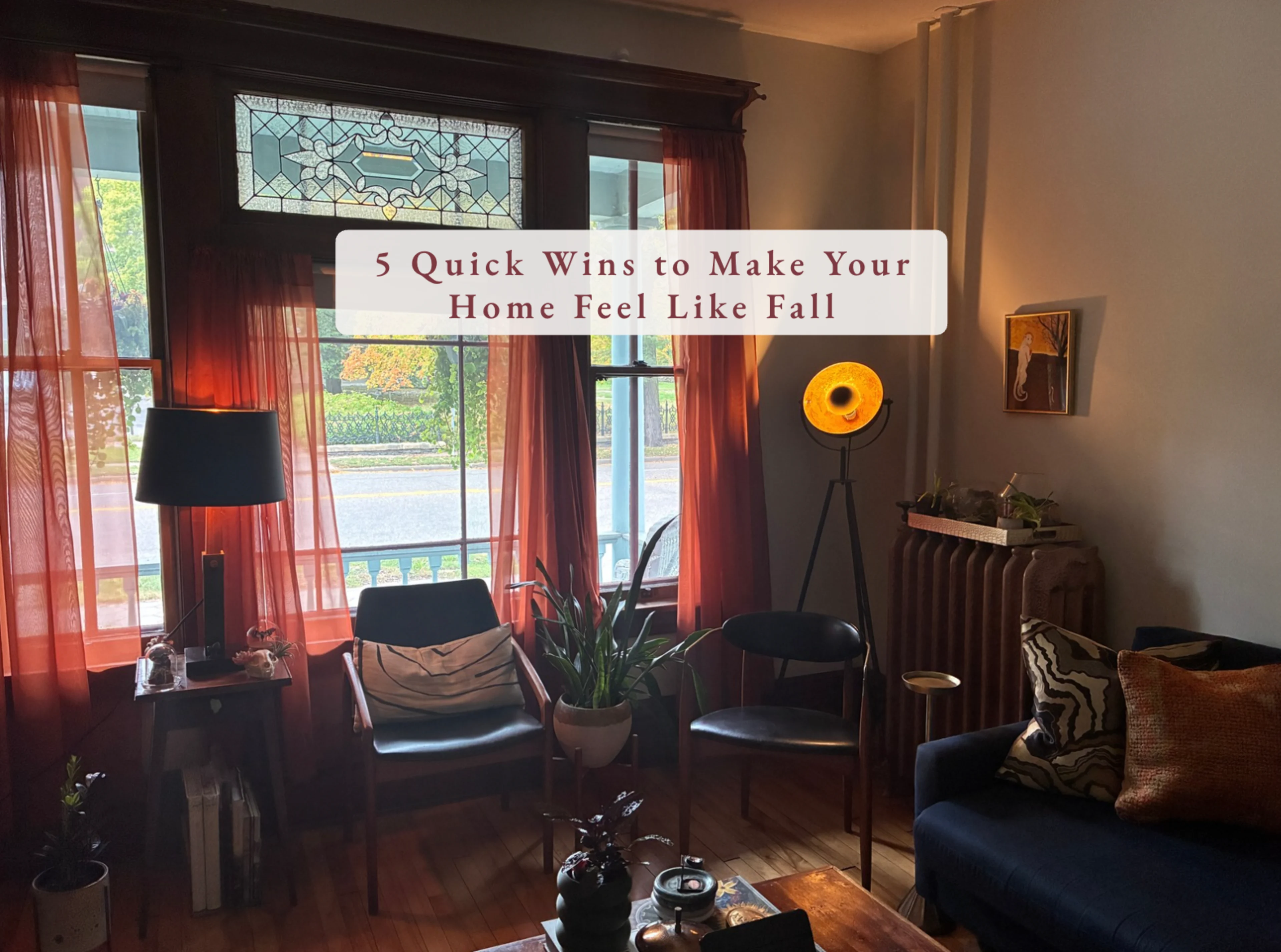
In my own living room, sheer drapery filters afternoon light against warm wood trim, while leather seating, linen, and layered textiles do the quiet work of adding depth. Nothing here is overly styled — it’s simply materials interacting with light and each other. This is what texture looks like in everyday spaces: subtle, lived-in, and quietly dimensional.
The Takeaway
If your space feels flat, don’t start with paint.
Start by asking:
Where can I introduce softness? Where can I add structure? What organic element is missing?
When materials are thoughtfully layered, a room feels grounded, dimensional, and deeply personal — even before the art goes up.
That’s where real design lives.
Want help layering texture in your own home?
Whether you’re refreshing one room or reimagining your entire space, I help clients create homes that feel grounded, personal, and thoughtfully layered — not staged or cookie-cutter.
If you’re ready to bring more depth and warmth into your space, you can book a design consultation or explore my current mood boards on my website.
Let’s make your home feel as good as it looks.