People ask me sometimes how it all starts. What do they need to prepare? Do they need a mood board already? A vision statement? A color palette picked out?
No. They need about ten minutes and a willingness to answer a few questions.
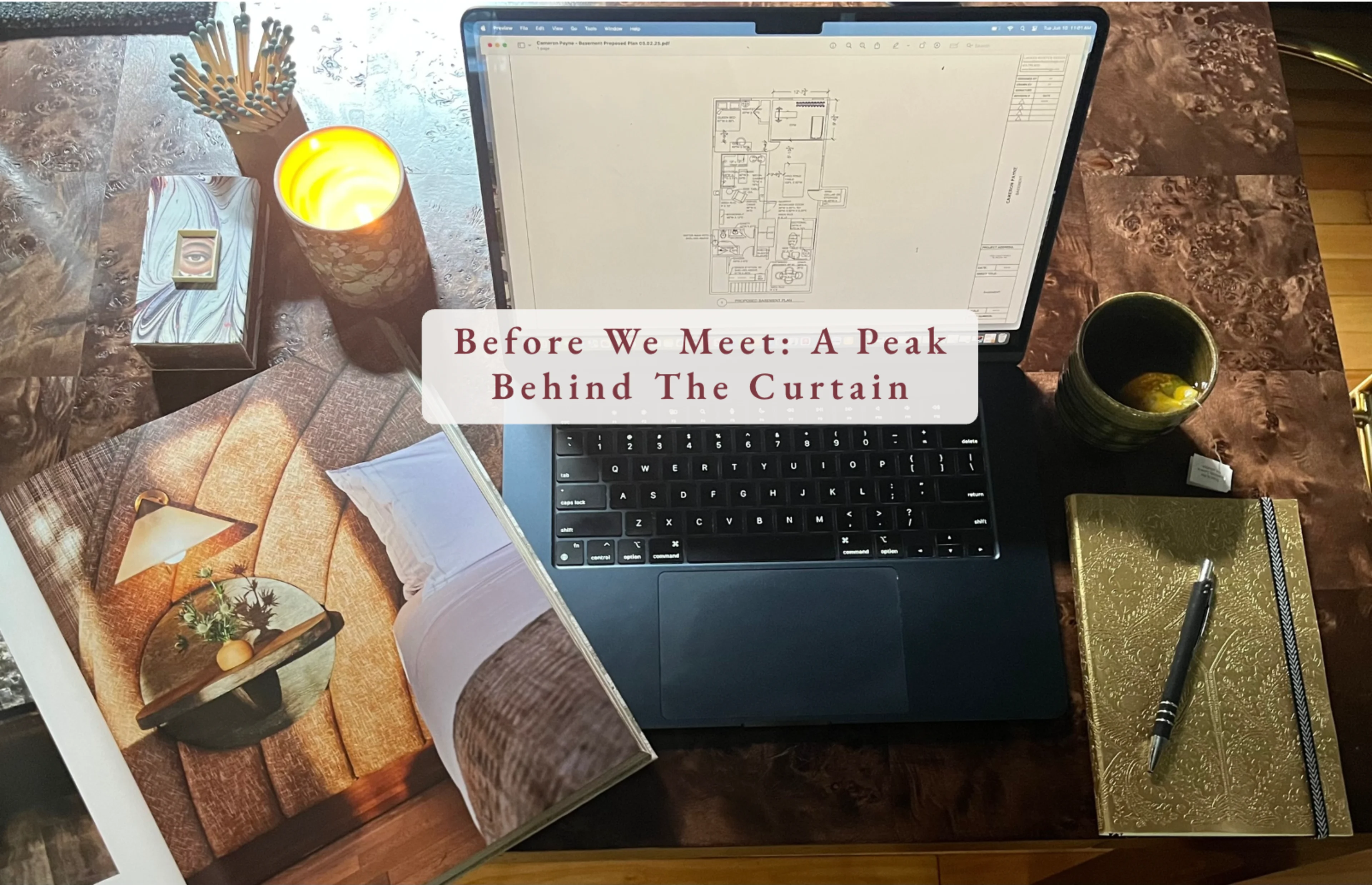
Here's exactly what happens before we ever set foot in the same room.
First, I send the portfolio
When someone reaches out, I ask a few quick questions first — age of the house, where you're located, which rooms you're thinking about. That's it.
Those answers do two things. They let me tailor our discovery call to your specific project from the very first minute — so we're not spending thirty minutes on things that don't apply to you. And they give me a reason to send the portfolio, which is where the real self-selection happens.
Every project in there is different. Some are more colorful, some more muted. Some are larger in scope, some more focused. A 1920s Mediterranean looks nothing like a modern downtown penthouse, which looks nothing like a ground-up new build. The materials are different, the mood is different, the clients are different. What stays consistent is the intention — the layering, the character, the feeling that a space was built for the specific people who live in it.
Take a look. If something in there speaks to you — even one room, one detail, one moment where you think that's the feeling I want — that's enough. You don't need to love every project. You just need to feel like there's something in there for you.
Then you book the call
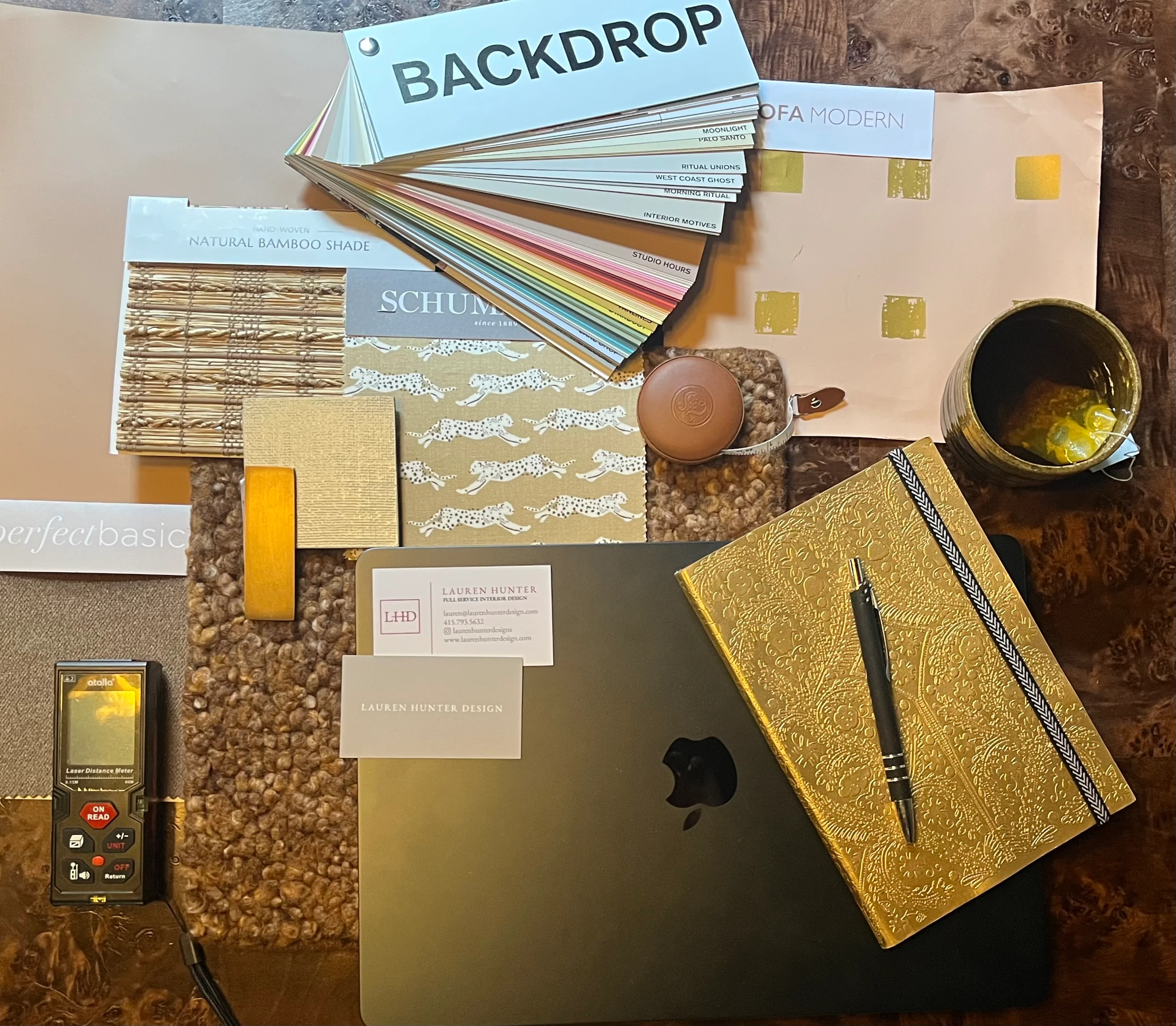
Once you've looked through the portfolio and want to move forward, you book a discovery call through Calendly. Thirty minutes. Complimentary. No prep work required on your end.
Everything else we figure out live.
The call itself
Thirty minutes — sometimes a little more if we're on a roll, which we usually are.
I'll give you a quick overview of how I work and what the process actually looks like. Then I'm mostly asking questions — and I'm already listening. Because I already know the basics about your home and your project, we can skip straight to the things that actually matter. How do you live? Who's in the house? What's driving this project — a renovation, a move, a long-overdue "I cannot look at this room for one more day" moment? What do you want to feel when you walk through the door?
One thing I always tell people: what you don't like is sometimes more useful than what you do. If there's a color you hate, a pattern that makes you cringe, a style that's never felt like you — tell me. I mean it. That information shapes everything. It means I'll never waste your time showing you something that was never going to work in the first place.
It's a real conversation. Not an intake form. By the end, we both know whether this is the right fit.
After the call, the welcome packet lands in your inbox
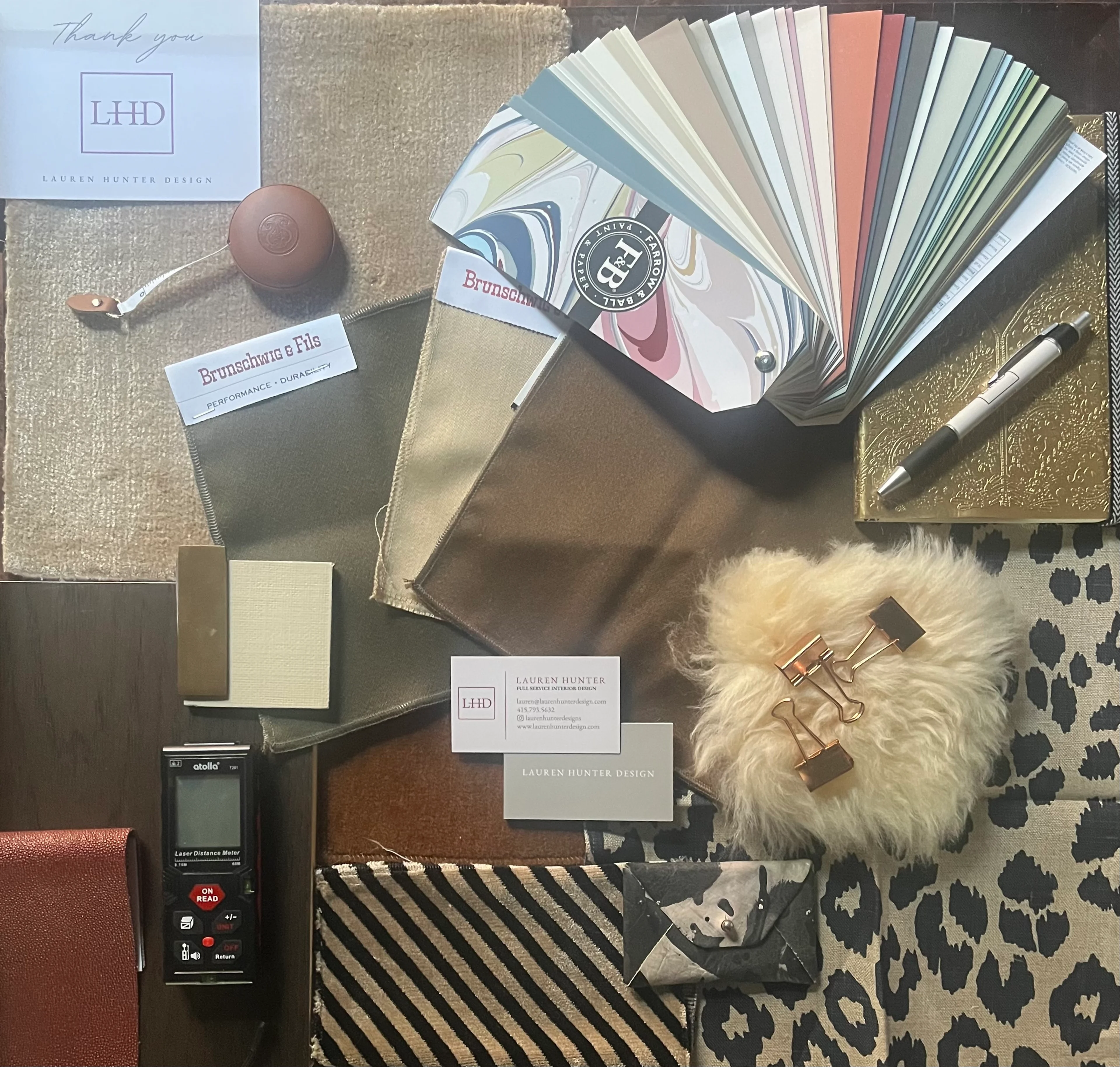
Tailored to you and your project. It walks you through my process, how we work together, and what to expect at every stage.
Along with it comes the client questionnaire — and I want to be honest with you, it's thorough. On purpose.
It covers who lives in your home and how you actually use it. Your lifestyle. Whether you entertain. Which spaces you want help with and why now. Budget and timeline. Your style direction and — just as importantly — the styles you actively dislike. Colors you love, colors you never want to see again. The mood you're going for. Metal finishes. Patterns. Pieces you're keeping. Your biggest challenge with the space. Where you normally shop. Whether you've worked with a designer before. And at the end, your dream outcome in your own words.
It closes with: "Thank you for trusting me with your home. Every answer here helps me show up prepared, thoughtful, and ready to create something that feels truly yours."
That's not a formality. It's the truth.
Then I sit with it
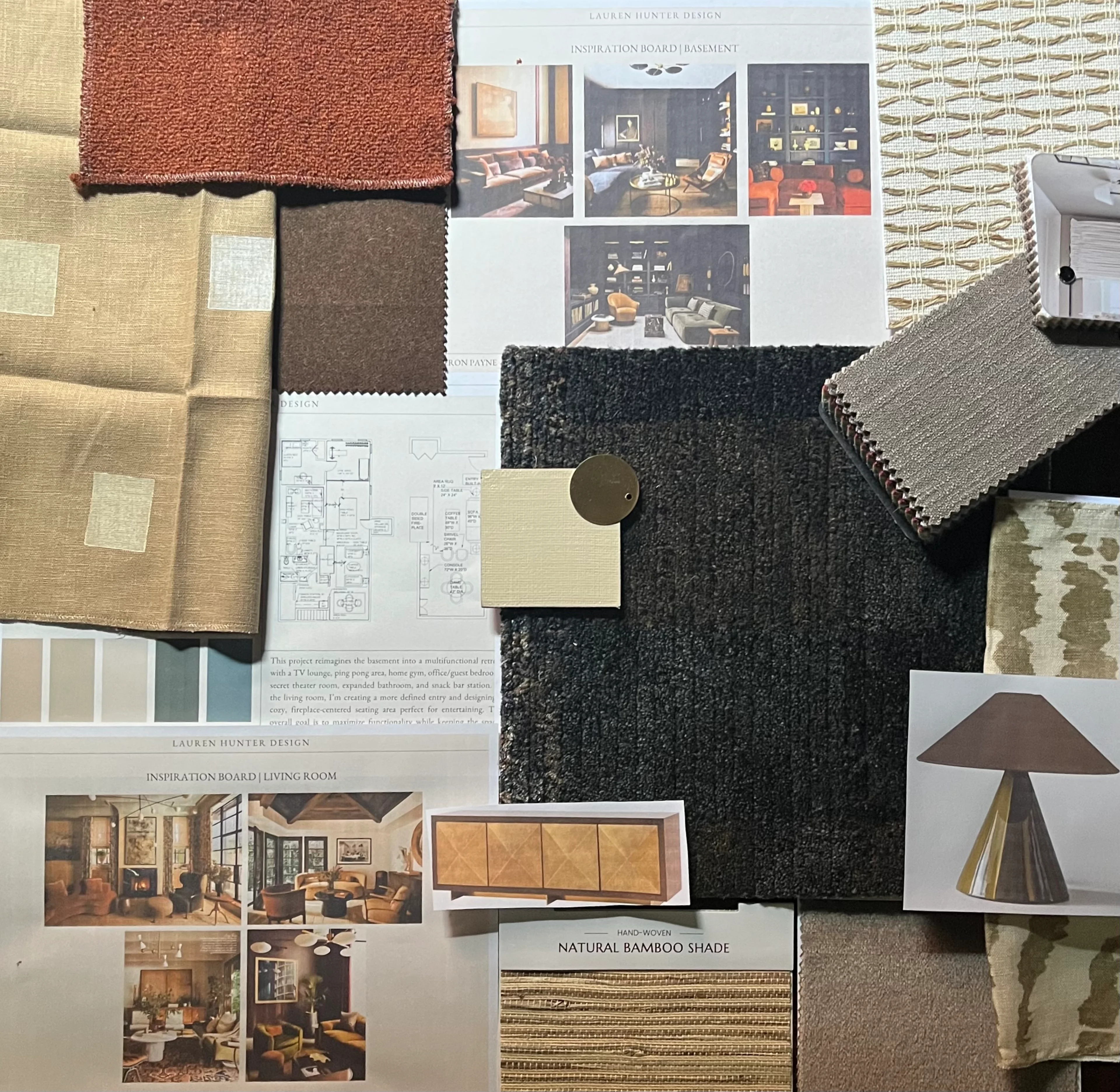
One to two business days. Not skimming — actually reading, thinking, starting to see the shape of things.
Listening is a huge part of this job — and it starts the moment someone reaches out. The questionnaire just gives me more to work with. More detail, more context, more of the specifics that let me show up to your walkthrough already thinking about your home rather than starting from scratch.
From there, I send a Letter of Agreement tailored to your specific project and scope — every one is different, because every project is different. Once that's signed and the retainer is paid — which simply holds your place in my schedule and goes toward your first invoice — we set up the walkthrough.
And then we meet
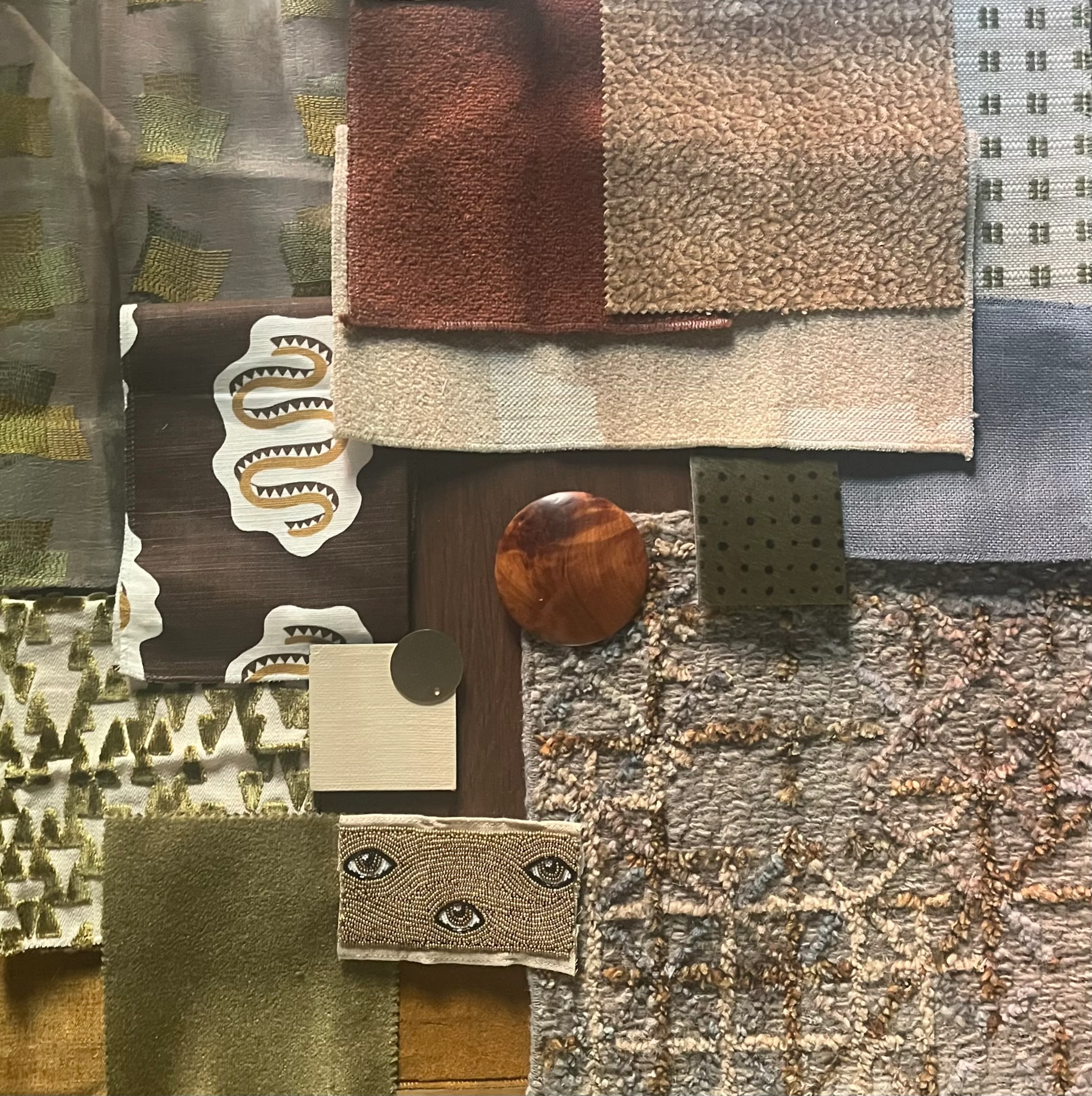
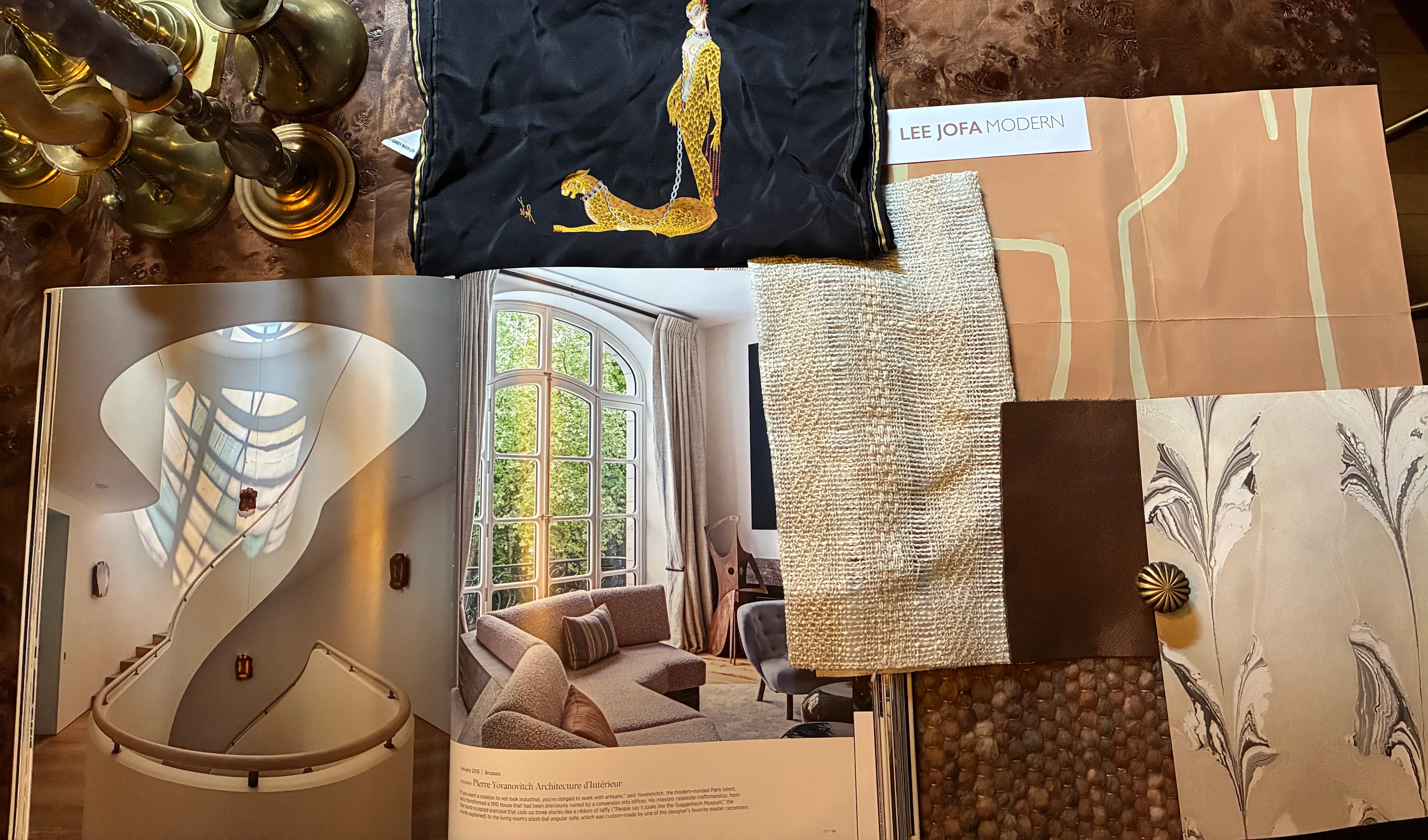
Every walkthrough looks different — because every client is different and every project calls for something different. Sometimes I show up with sofa silhouettes to see what you gravitate toward. Sometimes inspiration images to make sure we're speaking the same visual language. Sometimes wallpaper directions, paint options, or furniture shapes to react to. Sometimes a full presentation laying out a design direction before we've touched a thing.
It depends entirely on you and what your project needs. But I always show up having thought about you specifically. That part never changes.
And that's where it really begins.
Book your complimentary discovery call here →
P.S. — Yes, bring the Pinterest board. I will absolutely look at it.