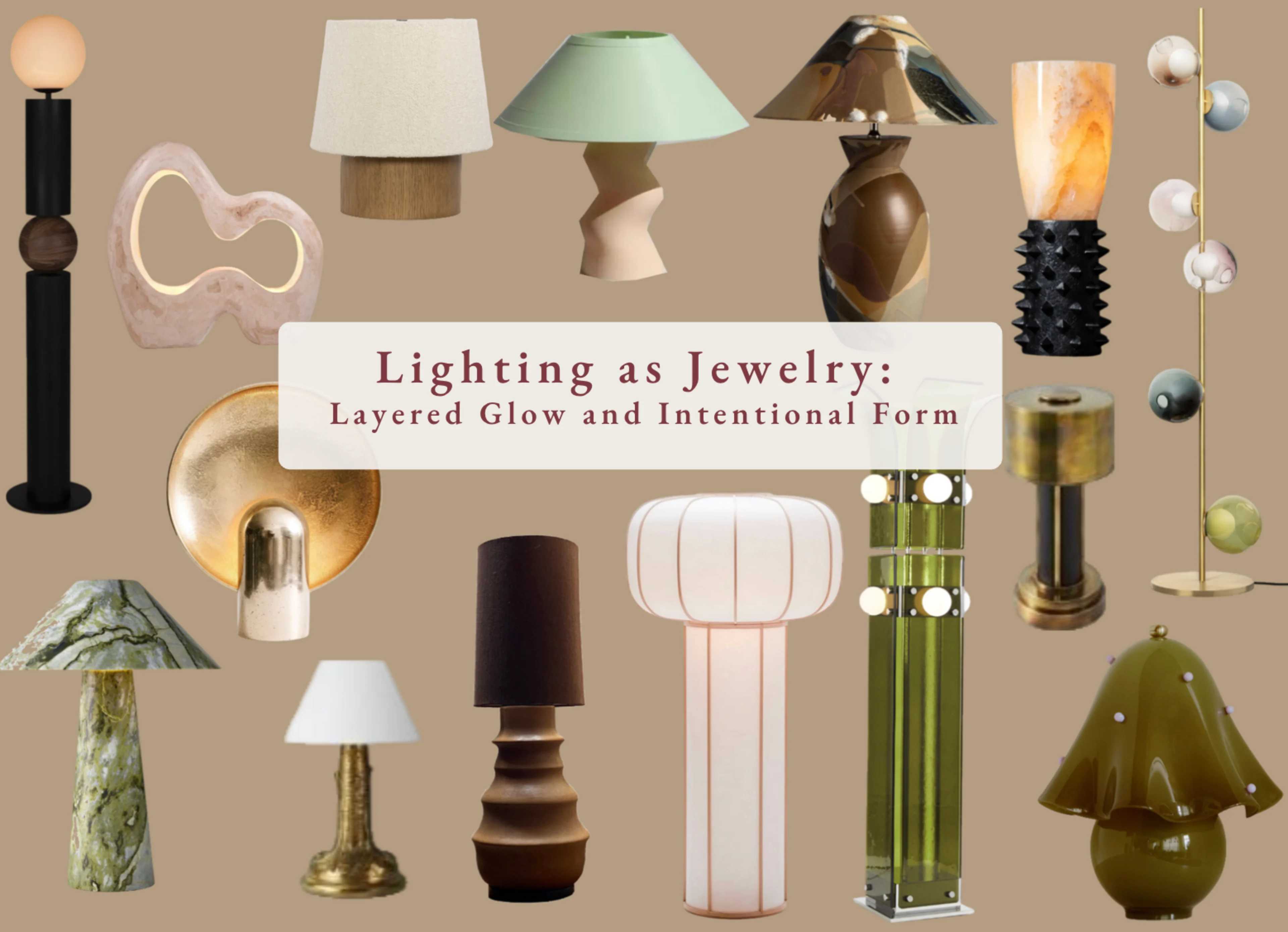
Treat lamps like accessories: choose one statement and one supporting piece, then let them do the styling for you. The right pair softens edges, flatters people, and makes materials read rich—no technical rabbit hole required. Stay in the warm range (about 2700–3000K) and think about shade + finish as much as the base: fabric, paper, rattan, alabaster, and milky glass filter light beautifully; brushed brass and bronzed metals keep it warm.
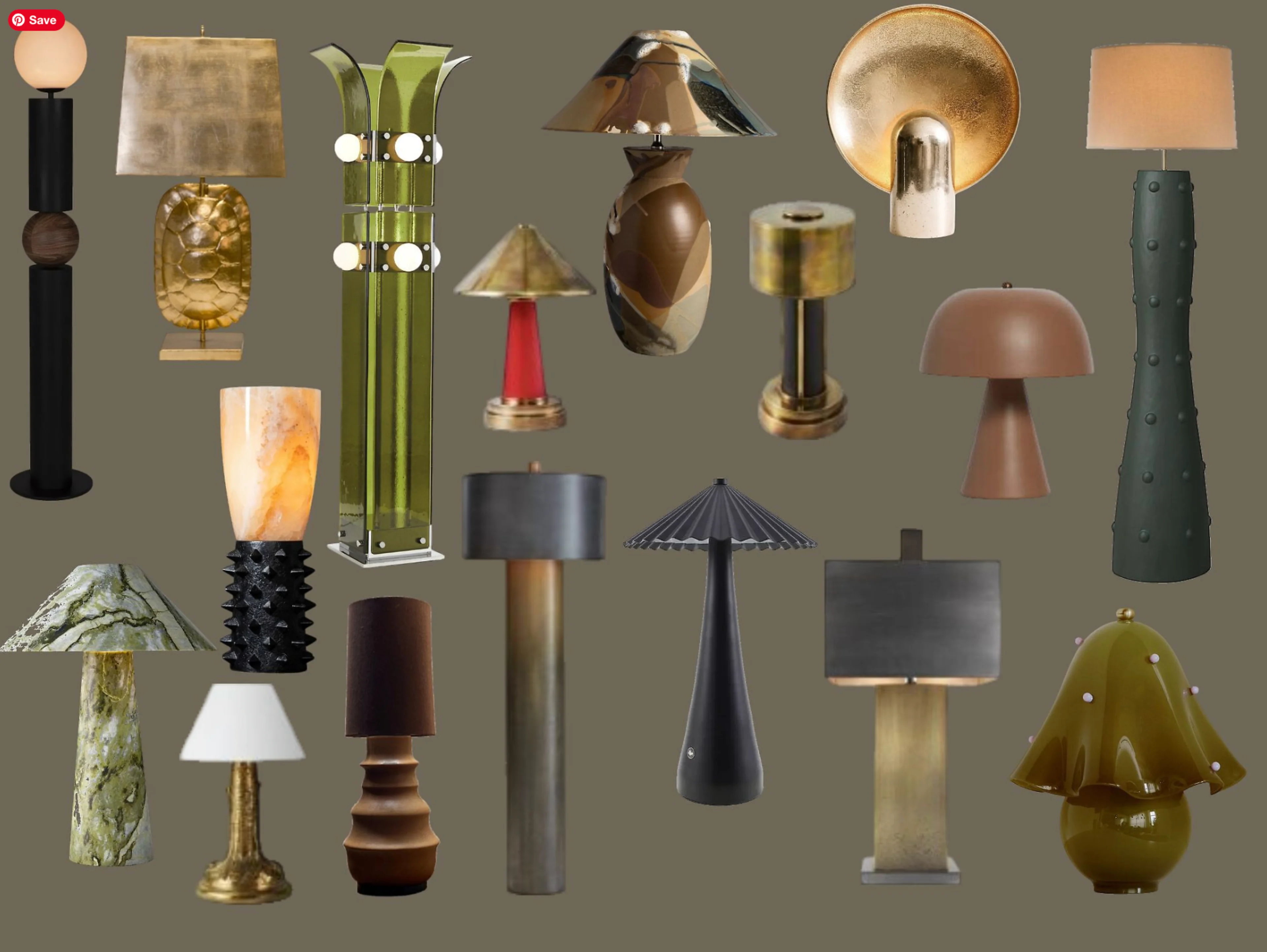
Moody Mix — Layered, Low-Lit, Loungey
Palette: dark woods, patinated brass, onyx, olive, mushroom.
How to build it
Start with a sculptural statement (tall floor lamp or dramatic table lamp) to set the mood.
Add a soft-shaded companion to spread light horizontally—drum, mushroom, or pleated shades are great.
Keep metals warm/aged so the room reads candlelit, not shiny.
Placement
Living room:
Tuck the floor lamp at the sofa’s end so the pool of light lands on cushions (hello, cozy). Echo its finish with a small table lamp by the chair so the seating group “wraps” in light.
Dining:
If the overhead is bright, park a tall lamp in a corner and place a petite table lamp on the buffet for a soft glow during dinner.
Bedroom:
Keep a pair of bedside lamps for balance; add a small shaded lamp on the dresser or a low stool for a gentle night light. Reserve a floor lamp for a reading corner.
Styling cues
Layer matte with subtle shimmer (velvet + antiqued brass).
Let one strong form lead (column, cone, totem) and keep the partner quieter.
Light & Airy — Soft Daylight, Easy & Fresh
Palette: pale woods, chalky whites, linen, rattan, milky glass, whisper pastels.
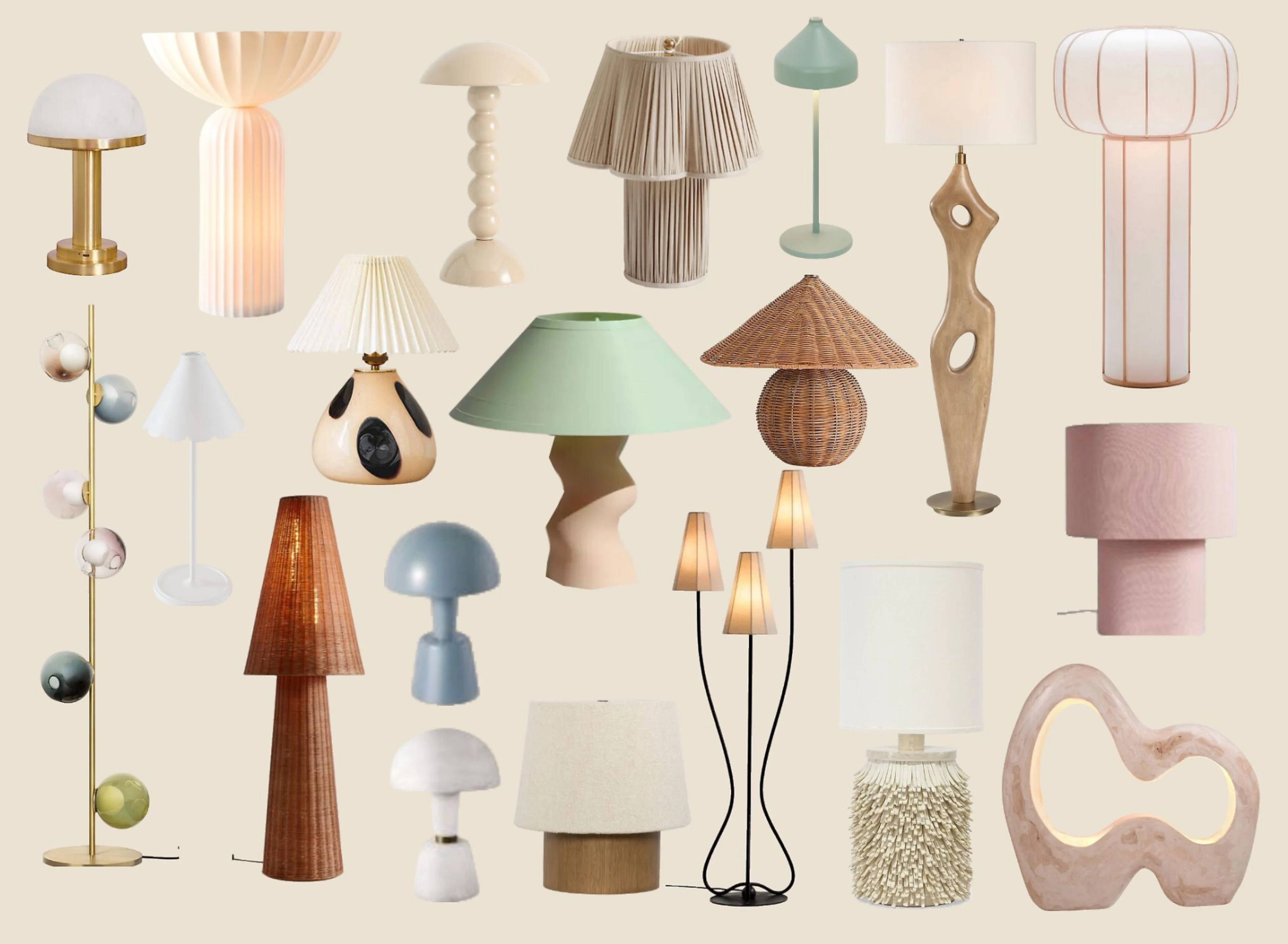
How to build it
Choose one lamp that brings height (slim floor or tall ceramic) and another with a wider shade to throw a halo across nearby surfaces.
Pleated linen, rice paper, and rattan shades filter light into a soft, flattering wash.
Placement
Living room:
Pair a cone/pleated floor lamp with a petite mushroom or linen-shade table lamp; aim both toward walls to bounce light and make the room feel bigger.
Dining:
A rattan or linen-shaded floor lamp in a corner + a tiny lamp on the buffet for soft glow. Dim the chandelier and let the lamps carry the vibe.
Bedroom:
Mix a sculptural bedside lamp with a fabric-wrapped mini on the dresser; keep cords neat so the look stays calm.
Styling cues
Combine chalky finishes with one polished touch (brushed brass finial, alabaster base).
Keep shapes rounded so the light feels gentle, not clinical.
Shade & Finish Cheat Notes
Fabric/linen/pleated:
soft, flattering, forgiving.
Paper/rice paper:
airy, diffused, modern-classic.
Alabaster/milky glass:
glows like a candle.
Rattan/basket weave:
warm texture, great in airy rooms.
Bronze/brushed brass:
keep it warm; avoid mirror-shiny when you want mood.
Common fixes (that change everything)
Too bright overheads?
Dim them and let two lamps do the heavy lifting.
Flat corners?
Add one floor lamp; point light toward a wall to bounce.
Glare on faces?
Lower shade heights slightly and switch to a fabric/pleated shade.
Room feels busy?
One statement form, one quiet partner—then stop.
How to use the boards
Moody board:
Pull one statement (tall, sculptural) + one soft shade piece in a warm finish. Place them just off the main seating and at the buffet for dinner glow.
Airy board:
Choose a slim floor lamp + a rounded, linen-shaded table lamp. Let pale walls do the bouncing.
Ready to rethink your lighting? Start with one sculptural form and one soft shade—then watch the whole room change. For personalized pairings or placement ideas, reach out anytime through my contact page.