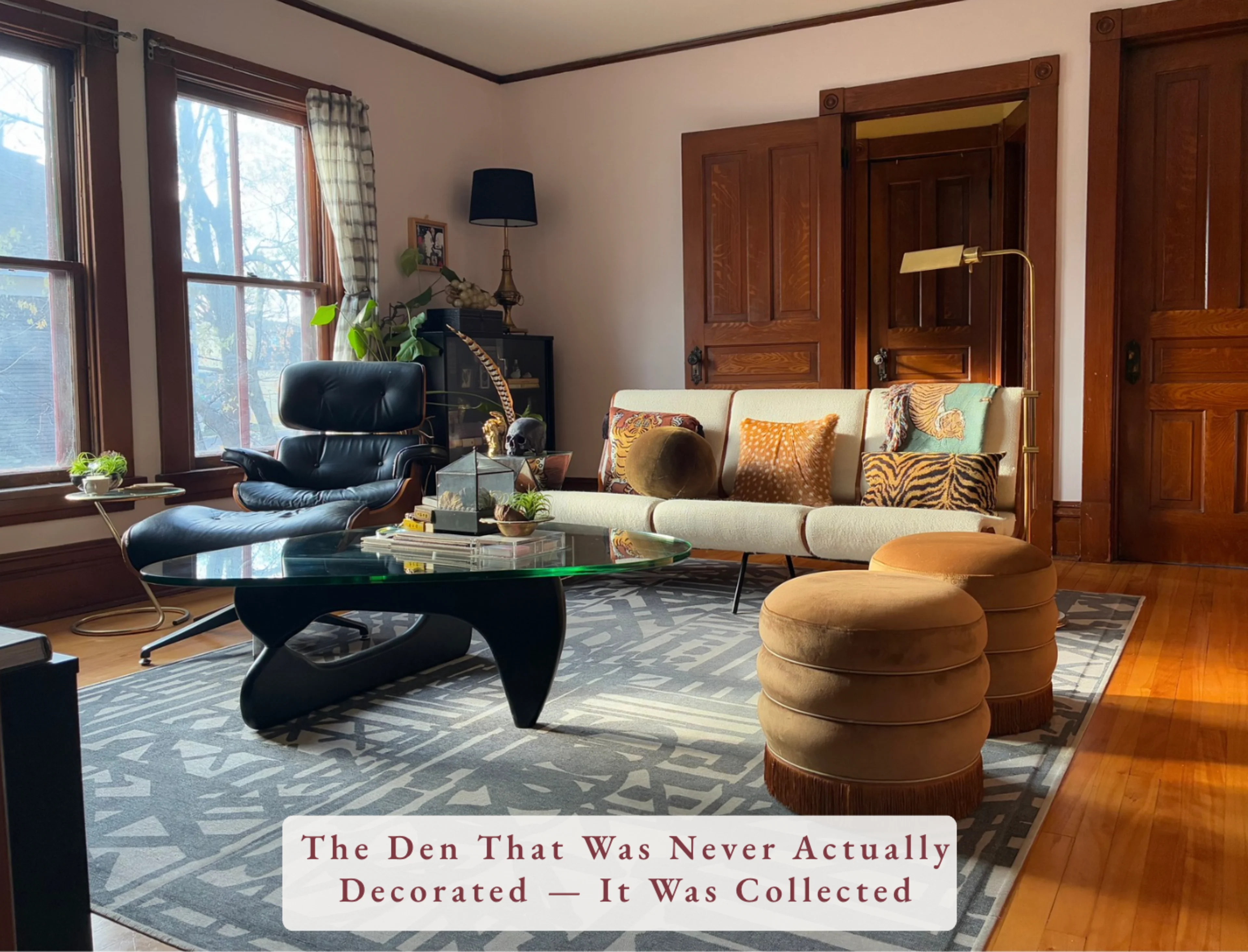
One of the least glamorous — and most important — parts of design is deciding where everyday life actually goes.
Not everything in a home is meant to be on display. And yet, everyone has things they use daily: remotes, blankets, mail, charging cords, shoes that get kicked off at the door. When these items don’t have a place, even the most beautifully designed room can start to feel unsettled.
The homes that feel calm and pulled together aren’t necessarily minimal — they’re intentional. The practical pieces have been considered just as carefully as the beautiful ones.

Storage That Belongs
Good storage doesn’t need to disappear, but it does need intention. A small lidded bowl becomes the natural home for cotton balls or charging cords. A sculptural box on a coffee table quietly holds remotes. Baskets take on blankets, books, or toys — not as an afterthought, but as part of the visual language of the room. These details rarely call attention to themselves. Instead, you feel their absence when they’re missing. Without them, surfaces become cluttered, rooms lose their rhythm, and the space starts working against you instead of with you.

The Quiet Work of Design
These aren’t dramatic design moves. They’re subtle, almost invisible decisions — but they’re the ones that make a home feel livable. Trays that corral without feeling rigid. Lidded vessels that hide everyday clutter while adding texture and weight. Storage pieces chosen for material, proportion, and form — not just function. This is where beauty and real life meet. Storage earns its place not by vanishing, but by belonging.

Rooms That Carry the Most Weight
Bedrooms and entryways often carry the greatest burden. They’re where days begin and end — where things are dropped, grabbed, forgotten, and gathered again. In these spaces, storage becomes part of the architecture:
Cabinets that conceal without feeling bulky
Wall-mounted pieces that lift clutter off the floor
Benches and built-ins that quietly multitask
Hooks, shelves, and compartments work best when they feel deliberate — not temporary or improvised. The goal isn’t perfection. It’s creating systems that support real habits, so the space stays calm even when life isn’t.


Designing for How You Actually Live
In my own home, I think about this constantly. Remotes live in a sculptural box on the coffee table — close at hand, but never visually noisy. It’s a small decision, but it keeps the room feeling intentional rather than cluttered. That’s the kind of thinking that shapes every project I work on. Not just how a space looks in photos, but how it feels on an ordinary Tuesday evening. Good design isn’t about having less. It’s about giving the things you own a place — so rooms can breathe, styling can hold, and life can happen without chaos taking over.
If you’d like help creating storage that feels as thoughtful as the rest of your home, explore my mood boards or reach out anytime. I’d love to help you design a space that works beautifully for real life.